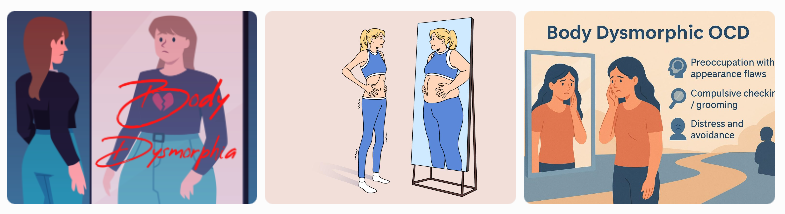
Body Dysmorphic Disorder (BDD), commonly called Dysmorphia, is a mental health condition where a person becomes intensely preoccupied with one or more perceived flaws in their physical appearance. These flaws are usually minor or invisible to others, yet the individual experiences them as severe defects, leading to significant emotional distress and interference in daily life. In homeopathy, remedies are used only as supportive care to help ease anxiety, obsessive thoughts, low self-esteem, and emotional imbalance. Body dysmorphic disorder requires professional psychiatric or psychological evaluation and treatment.


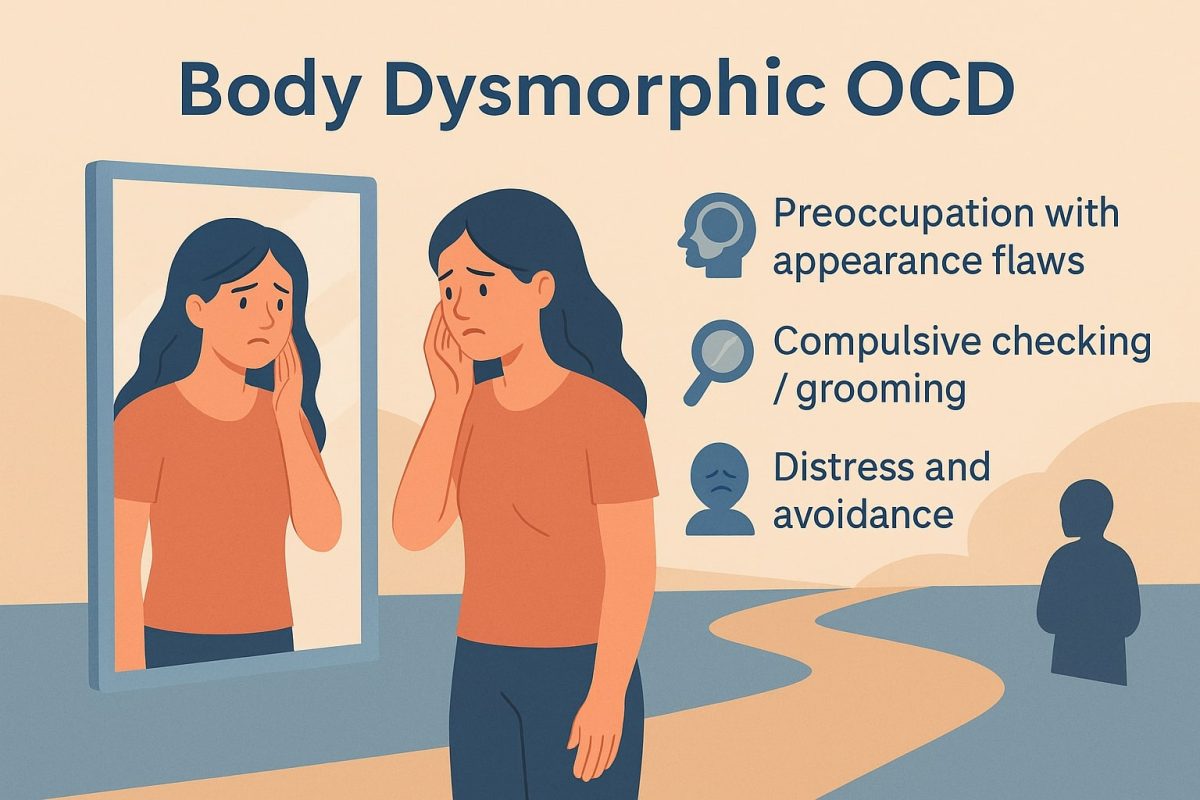
(Images above illustrate body dysmorphia — intense self-scrutiny in front of a mirror, distress over perceived appearance flaws, and compulsive checking or avoidance behaviors.)
Causes
The exact cause is not fully known, but contributing factors include:
- Genetic predisposition and family history of anxiety, OCD, or mood disorders
- Imbalance in brain chemicals, particularly serotonin
- Environmental influences like childhood teasing, bullying, trauma, or cultural pressure on appearance
- Social media exposure and perfectionistic personality traits
Symptoms
Common symptoms include:
- Excessive focus on minor or imagined defects (skin, nose, hair, body shape, etc.)
- Repetitive behaviors such as mirror checking, skin picking, excessive grooming, or seeking reassurance
- Strong anxiety, shame, depression, or social withdrawal
- Avoidance of social situations, work, or school due to appearance concerns
- Repeated cosmetic procedures with little satisfaction
- In severe cases, suicidal thoughts or impaired daily functioning
Homeopathy Medicines with Key Symptoms and Doses
Homeopathic remedies for dysmorphia are highly individualized based on the person’s mental-emotional state, constitution, and specific preoccupations. The following are sometimes considered for supportive care. Remedy selection must be determined only by a qualified homeopath experienced in mental health after detailed case-taking, in close coordination with a psychiatrist or psychologist. These are general guidelines only.
Natrum Muriaticum For reserved, sensitive persons who dwell on past emotional hurts and feel deeply insecure about their appearance. They often crave salt and avoid consolation. Typical use: 30C or 200C, 3-5 pellets 1-2 times daily or sparingly.
Lycopodium Clavatum For individuals with low self-confidence, anticipatory anxiety, and fear of criticism or being judged on their looks. Digestive complaints often accompany. Typical use: 30C or 200C, 3-5 pellets 1-2 times daily.
Silicea For delicate, refined persons who lack confidence and fixate on minor imperfections. They feel timid, oversensitive, and chilly. Typical use: 30C or 6X, 3-5 pellets 1-2 times daily.
Arsenicum Album For perfectionistic anxiety, restlessness, and fear about appearance flaws. The person feels chilly but better from warmth and company. Typical use: 30C, 3-5 pellets 1-2 times daily (short term).
Calcarea Carbonica For fair, sweaty persons with constitutional sluggishness and deep insecurity about body image or social appearance. Typical use: 30C or 200C, 3-5 pellets once or twice weekly.
Pulsatilla For emotionally sensitive persons with changeable moods who seek reassurance and feel better in open air. Typical use: 30C, 3-5 pellets 1-2 times daily.
Thuja Occidentalis For fixed ideas about appearance, often with a history of suppressed eruptions or feeling “ugly” inside. Typical use: 30C, 3-5 pellets 1-2 times daily (short courses).
Ignatia Amara For acute emotional distress following disappointment or shock, with changeable moods and sighing. Typical use: 30C, 3-5 pellets 1-2 times daily (short term).
Sulphur Often used as an intercurrent remedy in chronic cases with burning anxiety or when well-indicated remedies do not hold. Typical use: 30C or 200C, sparingly (once weekly under guidance).
Graphites For persons who feel self-conscious, clumsy, or unattractive with skin or body image concerns. Typical use: 30C, 3-5 pellets 1-2 times daily.
Important guidance: Body dysmorphic disorder is a serious psychiatric condition that often responds well to cognitive behavioral therapy (CBT) and, when needed, medications such as SSRIs. Homeopathy may provide supportive benefits for anxiety, obsessive thoughts, and self-esteem but must never replace professional mental health care. If there are signs of severe depression or suicidal thoughts, seek immediate professional help. This information is for educational purposes only and not a substitute for professional medical or homeopathic advice. Consult a qualified psychiatrist or psychologist immediately for accurate diagnosis and management, and a registered homeopath experienced in mental health only for individualized supportive remedy selection. With proper treatment, most people with body dysmorphia can achieve significant improvement and lead fulfilling lives.