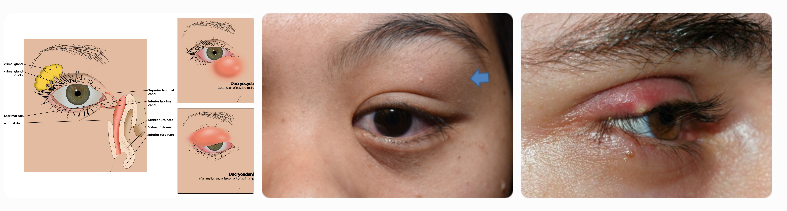
Dacryoadenitis (also spelled Dacryoadenitis) is inflammation of the lacrimal gland, the almond-sized tear-producing gland located in the upper outer corner of each eye socket. It can occur as an acute (sudden) or chronic (long-lasting) condition and may affect one or both eyes. In homeopathy, remedies are used only as supportive care to help reduce swelling, pain, redness, and discomfort while supporting the body's natural healing. Dacryoadenitis requires prompt medical evaluation by an ophthalmologist to identify the cause and rule out serious conditions.
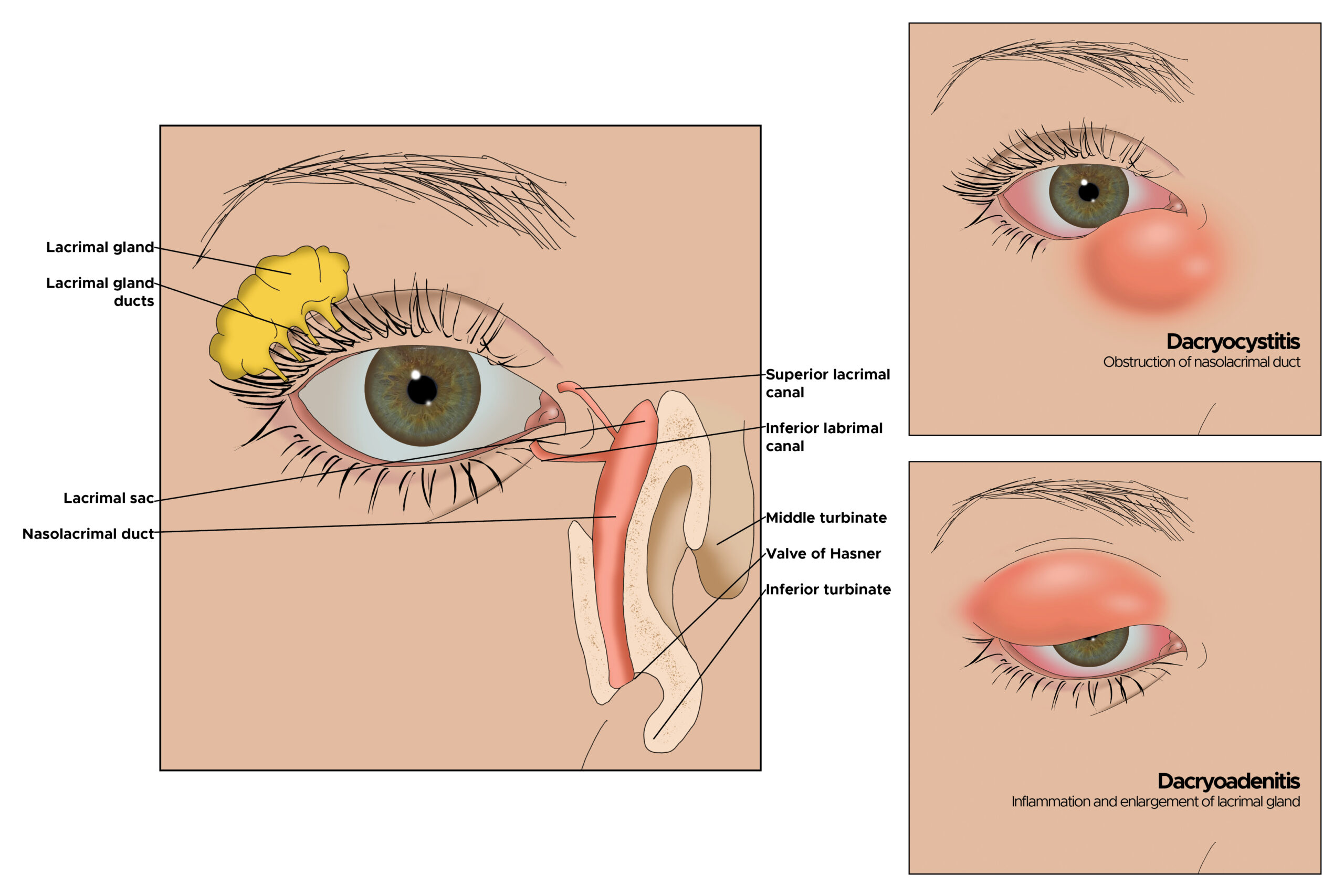
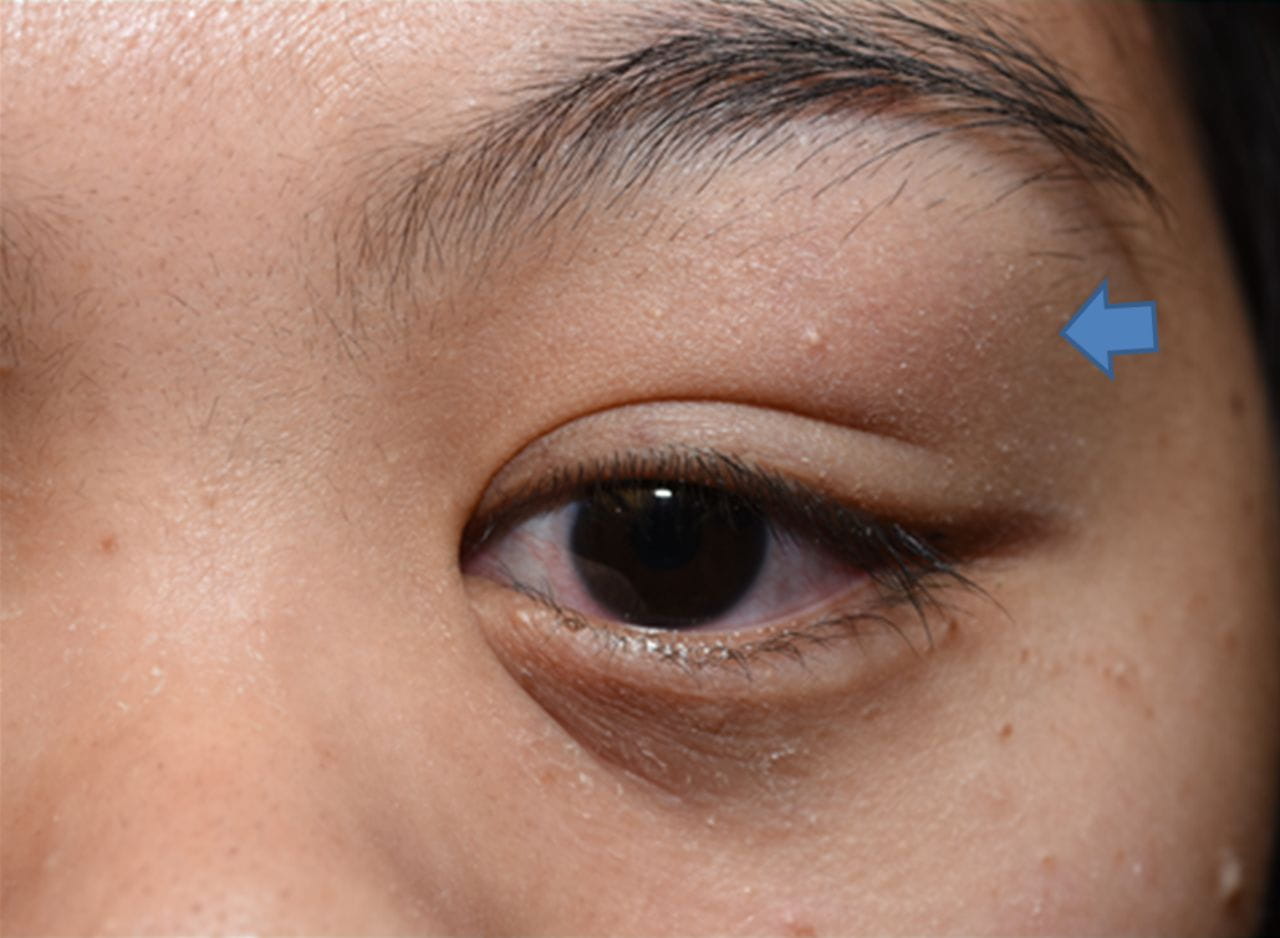

(Images above show dacryoadenitis — swelling and redness in the upper outer eyelid near the lacrimal gland, with possible S-shaped eyelid deformity.)
Causes
Dacryoadenitis is commonly caused by:
- Viral infections (mumps, Epstein-Barr virus, herpes zoster)
- Bacterial infections (staphylococcus, streptococcus, gonococcus)
- Autoimmune diseases (Sjögren syndrome, sarcoidosis, IgG4-related disease)
- Idiopathic (unknown) causes or rarely tumors/lymphoproliferative disorders
Symptoms
Common symptoms include:
- Pain, tenderness, and swelling in the upper outer corner of the eyelid
- Redness and warmth over the affected area
- S-shaped curve or drooping of the upper eyelid
- Excess tearing, discharge, or dry eye feeling
- Difficulty opening the eye or pain with eye movement
- In acute cases: fever, malaise, or preauricular lymph node swelling
Homeopathy Medicines with Key Symptoms and Doses
Homeopathic remedies for dacryoadenitis are selected based on the type of inflammation, pain, discharge, and the person’s overall constitution. The following are commonly considered for supportive management. Remedy selection must be determined only by a qualified homeopath after detailed case-taking, in close coordination with an ophthalmologist. These are general guidelines only.
Belladonna For sudden, intense inflammation with throbbing pain, redness, and heat. The area is very sensitive to touch and light. Typical use: 30C, 3-5 pellets 1-2 times daily (short term).
Mercurius Solubilis For swollen, painful gland with offensive discharge and night aggravation. Salivation or bad breath may be present. Typical use: 30C, 3-5 pellets 1-2 times daily (short term).
Hepar Sulphuris For extremely sensitive, pus-forming inflammation with stitching pain. Better from warmth. Typical use: 30C, 3-5 pellets 1-2 times daily (short term).
Silicea For slow-healing or chronic cases with tendency to suppuration and weakness. Supports tissue repair. Typical use: 6X or 30C, 3-5 pellets 1-2 times daily.
Pulsatilla For changeable symptoms with thick, bland discharge and weeping mood. Better in open air. Typical use: 30C, 3-5 pellets 1-2 times daily.
Rhus Toxicodendron For swelling with stiffness and restlessness. Pain better from warm applications and continued motion. Typical use: 30C, 3-5 pellets 1-2 times daily.
Apis Mellifica For stinging, burning pain with puffy swelling and thirstlessness. Better from cold applications. Typical use: 30C, 3-5 pellets 1-2 times daily (short term).
Calcarea Carbonica For chronic tendency in fair, sweaty persons with slow recovery and constitutional weakness. Typical use: 30C or 200C, 3-5 pellets once or twice weekly.
Sulphur Often used as an intercurrent remedy in chronic or recurrent cases with burning and unhealthy skin tendency. Typical use: 30C or 200C, sparingly (once weekly under guidance).
Euphrasia Officinalis For eye inflammation with profuse, acrid tearing and sensitivity to light. Typical use: 30C, 3-5 pellets 1-2 times daily.
Important guidance: Dacryoadenitis is usually treatable with antibiotics (if bacterial), antivirals, or anti-inflammatory medicines as prescribed by an eye specialist. Warm compresses and rest help in mild cases. In chronic or recurrent cases, further investigations (blood tests, imaging, or biopsy) may be needed to rule out autoimmune or other systemic diseases. Homeopathy may help reduce pain, swelling, and discomfort as supportive care but must never replace proper ophthalmologic evaluation and treatment. Seek immediate medical attention for severe pain, vision changes, fever, or rapid worsening. This information is for educational purposes only and not a substitute for professional medical or homeopathic advice. Consult a qualified ophthalmologist immediately for accurate diagnosis and management, and a registered homeopath for individualized supportive remedy selection. With timely care, most cases resolve well without long-term complications.