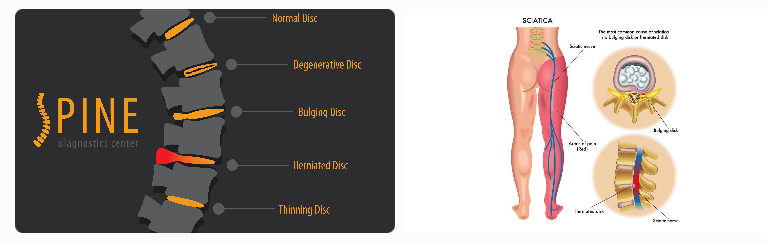
Disc Degeneration (also known as Degenerative Disc Disease) is a common age-related condition in which the intervertebral discs in the spine lose their flexibility, hydration, and shock-absorbing ability. Over time, the discs become thinner, drier, and may develop small tears, leading to reduced cushioning between the vertebrae. It most commonly affects the lower back (lumbar) or neck (cervical) region and is a major cause of chronic back or neck pain. In homeopathy, remedies are used only as supportive care to help relieve pain, stiffness, and inflammation while supporting tissue strength. Disc degeneration is a chronic condition that requires proper medical evaluation and often involves physiotherapy, posture correction, and pain management.
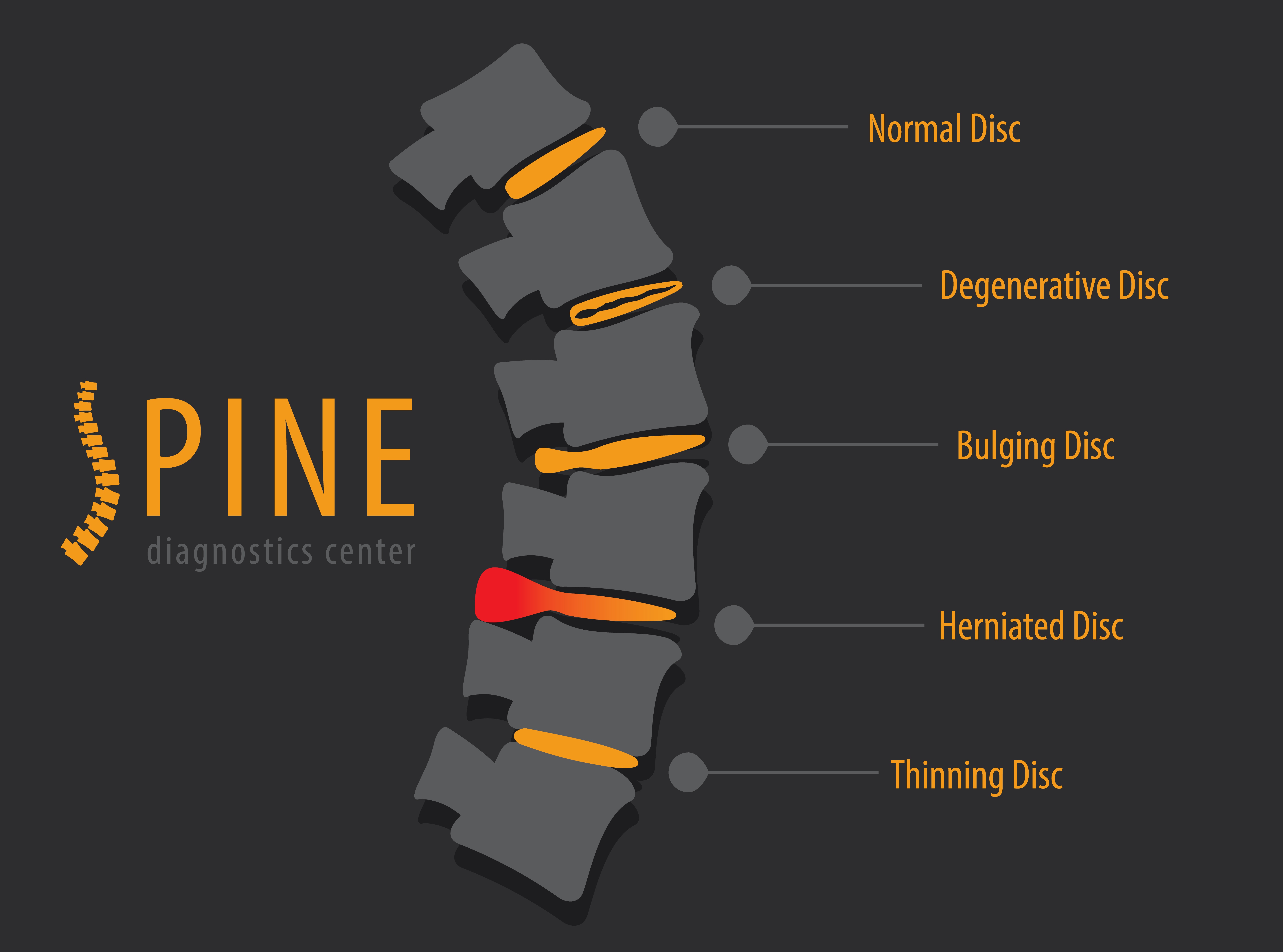
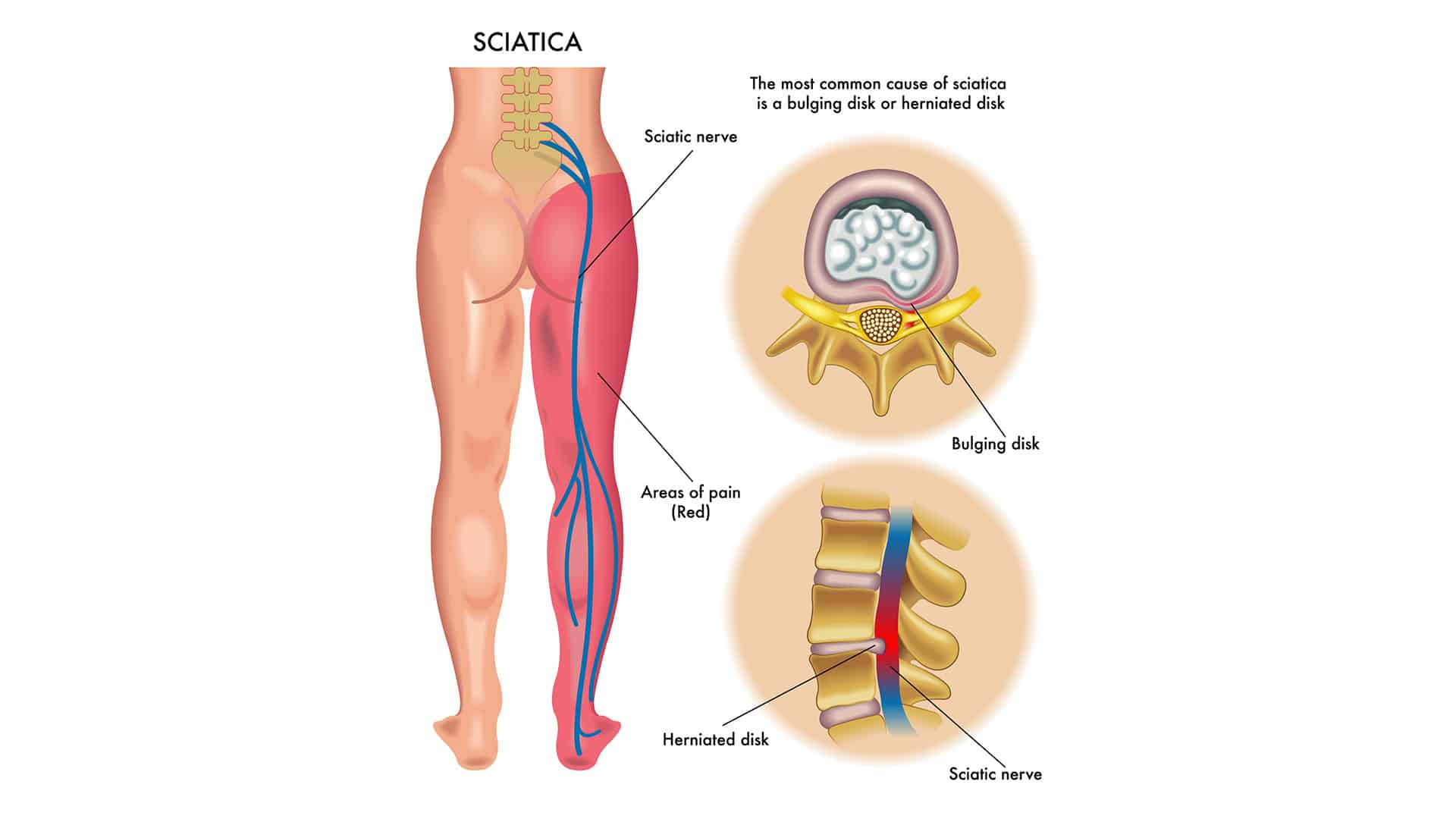
(Images above show degenerative disc disease — thinning and drying of intervertebral discs, loss of disc height, and possible bone spur formation.)
Causes
Disc degeneration occurs due to:
- Natural aging process (discs lose water content after age 30–40)
- Repetitive mechanical stress or heavy lifting
- Obesity, poor posture, and sedentary lifestyle
- Genetic predisposition and smoking
- Previous injury or trauma to the spine
Symptoms
Common symptoms include:
- Chronic dull or sharp pain in the lower back or neck
- Stiffness, especially after sitting or upon waking
- Pain that worsens with bending, lifting, or prolonged sitting/standing
- Radiating pain, numbness, or tingling into the arms or legs (if nerves are compressed)
- Reduced flexibility and muscle weakness in advanced cases
- In severe cases: difficulty walking or loss of bladder/bowel control (rare but serious)
Homeopathy Medicines with Key Symptoms and Doses
Homeopathic remedies for disc degeneration are selected based on the character of pain, stiffness, and individual constitution. The following are commonly considered for supportive management. Remedy selection must be determined only by a qualified homeopath after detailed case-taking, in coordination with an orthopedic specialist or physiotherapist. These are general guidelines only.
Ruta Graveolens One of the top remedies for degenerative disc disease with bruised, sore pain and stiffness in the spine. Pain worsens from cold and improves from motion. Typical use: 30C, 3-5 pellets 1-2 times daily.
Rhus Toxicodendron For stiffness and pain that is worse after rest and improves with continued gentle movement and warmth. The person feels restless. Typical use: 30C, 3-5 pellets 1-2 times daily.
Arnica Montana For soreness and bruised feeling in the back after strain or chronic wear and tear. Helps reduce inflammation. Typical use: 30C, 3-5 pellets 1-2 times daily (short term).
Bryonia Alba For sharp pain that is worse from the slightest movement and better from absolute rest or pressure. Typical use: 30C, 3-5 pellets 1-2 times daily.
Calcarea Fluorica Supports connective tissue and disc health in chronic degenerative cases with stiffness and hard swellings. Typical use: 6X or 30C, 3-5 pellets 1-2 times daily.
Silicea For slow-healing and weakness in chronic spinal degeneration with tendency to stiffness. Typical use: 6X or 30C, 3-5 pellets 1-2 times daily.
Hypericum Perforatum For sharp, shooting nerve pain radiating from the spine due to nerve compression. Typical use: 30C, 3-5 pellets 1-2 times daily.
Calcarea Carbonica Suited to fair, sweaty persons with constitutional sluggishness and chronic back pain from degeneration. Typical use: 30C or 200C, 3-5 pellets once or twice weekly.
Sulphur Often used as an intercurrent remedy when there is burning pain or unhealthy tendency in chronic cases. Typical use: 30C or 200C, sparingly (once weekly under guidance).
Natrum Sulphuricum For pain and stiffness worsened by damp weather or after injury. Supports liver and spinal health. Typical use: 30C, 3-5 pellets 1-2 times daily.
Important guidance: Disc degeneration is managed with physiotherapy, posture correction, weight control, regular exercise (core strengthening), and pain relief as needed. In advanced cases with nerve compression, epidural injections or surgery may be required. Homeopathy may help relieve pain and stiffness as supportive care but must never replace proper orthopedic evaluation, imaging (MRI), and medical treatment. Avoid heavy lifting, maintain good posture, and stay active within limits. This information is for educational purposes only and not a substitute for professional medical or homeopathic advice. Consult a qualified orthopedic doctor or spine specialist immediately for accurate diagnosis and management (especially if there is radiating pain, numbness, or weakness), and a registered homeopath for individualized supportive remedy selection. Consistent care can slow progression and improve quality of life.