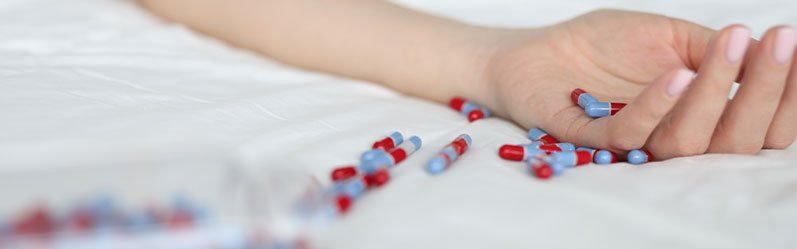
Drug Overdose is a serious and potentially life-threatening condition that occurs when a person takes more than the recommended or safe amount of a medication, drug, or substance. It can involve prescription medicines, over-the-counter drugs, recreational substances, or accidental ingestion. Drug overdose affects multiple body systems and requires immediate emergency medical intervention. In homeopathy, remedies are used only as supportive care after the person has been stabilized in hospital to help with residual symptoms like nausea, anxiety, weakness, or organ stress. Homeopathy is never a substitute for emergency treatment.
(Images above show the critical nature of drug overdose — unconsciousness, respiratory depression, and the urgent need for medical help.)
Causes
Drug overdose can happen due to:
- Accidental intake (mistaken dosage, especially in children or elderly)
- Intentional overdose (suicidal attempt or misuse)
- Mixing multiple drugs or alcohol with medications
- Taking drugs with unknown potency (street drugs)
- Impaired judgment due to addiction or mental health issues
Symptoms
Symptoms vary depending on the substance but commonly include:
- Drowsiness, confusion, or unconsciousness
- Slow or difficult breathing
- Nausea, vomiting, or abdominal pain
- Seizures, tremors, or irregular heartbeat
- Dilated or constricted pupils, cold/clammy skin
- In severe cases: coma, respiratory failure, or cardiac arrest
Homeopathy Medicines with Key Symptoms and Doses
Homeopathic remedies may be considered only after emergency stabilization to support recovery and manage residual symptoms. The following are sometimes used supportively. Remedy selection must be determined only by a qualified homeopath after full case evaluation, in close coordination with the treating physician. These are general guidelines only. Never use homeopathy as primary treatment for overdose.
Arsenicum Album For extreme anxiety, restlessness, and weakness after overdose with burning sensations and fear of death. The person wants small sips of water. Typical use: 30C, 3-5 pellets every 2–4 hours during acute distress (short term, under supervision).
Nux Vomica Useful for irritability, nausea, and digestive upset after overdose of stimulants or sedatives. The person may have spasmodic symptoms. Typical use: 30C, 3-5 pellets 1-2 times daily (short term).
Carbo Vegetabilis For collapse-like state with coldness, air hunger, and desire to be fanned. Extreme exhaustion after overdose. Typical use: 30C, 3-5 pellets 1-2 times daily (short term).
Opium For stupor, drowsiness, or coma-like state with slow breathing after narcotic overdose (used very cautiously). Typical use: 30C, 3-5 pellets sparingly (under expert guidance only).
Ipecacuanha For persistent nausea and vomiting that does not relieve the feeling. Clean tongue despite symptoms. Typical use: 30C, 3-5 pellets 1-2 times daily (short term).
Phosphorus For weakness, anxiety, and burning sensations after overdose affecting the nervous system or liver. Typical use: 30C, 3-5 pellets 1-2 times daily (use cautiously).
Veratrum Album For collapse with cold sweat, profuse vomiting or diarrhea, and icy coldness. Typical use: 30C, 3-5 pellets 1-2 times daily (short term, under guidance).
China Officinalis For marked weakness and debility after fluid loss or prolonged effects of overdose. Typical use: 30C, 3-5 pellets 1-2 times daily.
Gelsemium For trembling, dizziness, and heaviness after overdose with nervous exhaustion. Typical use: 30C, 3-5 pellets 1-2 times daily.
Sulphur Often used as an intercurrent remedy in the recovery phase when there is burning or unhealthy tendency. Typical use: 30C or 200C, sparingly (once weekly under guidance).
Important guidance: Drug overdose is a medical emergency. If you suspect an overdose, call emergency services immediately or go to the nearest hospital. Treatment may include activated charcoal, antidotes, supportive ventilation, or dialysis depending on the substance. Homeopathy has no role in the acute management of overdose and must only be considered later for supportive recovery under expert supervision. Prevention is key — store medicines safely, never mix drugs with alcohol, and follow prescribed doses. This information is for educational purposes only and not a substitute for professional medical or homeopathic advice. Seek immediate hospital care for any suspected drug overdose. Consult a qualified doctor for proper management and a registered homeopath only for post-stabilization supportive care. Early intervention saves lives.