Dural Tear (also known as Dural Defect or Dura Mater Tear) is a breach or hole in the dura mater, the tough outermost membrane that surrounds and protects the brain and spinal cord. When the dura tears, cerebrospinal fluid (CSF) can leak out, leading to intracranial hypotension (low CSF pressure). It can occur spontaneously or after trauma, surgery, lumbar puncture, or epidural anesthesia. In homeopathy, remedies are used only as supportive care to help relieve headache, dizziness, and associated symptoms while the body attempts to heal or after medical intervention (such as blood patch or surgery). Dural tear is a serious condition that requires prompt diagnosis and conventional medical management.
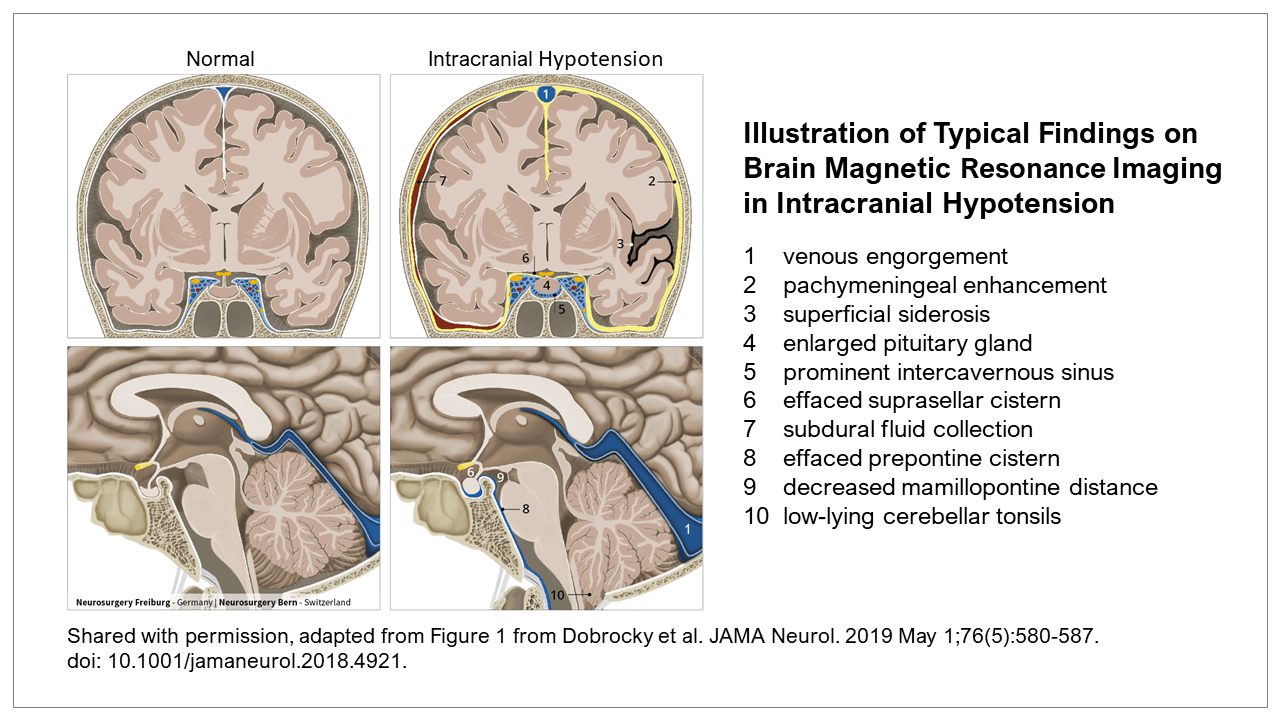
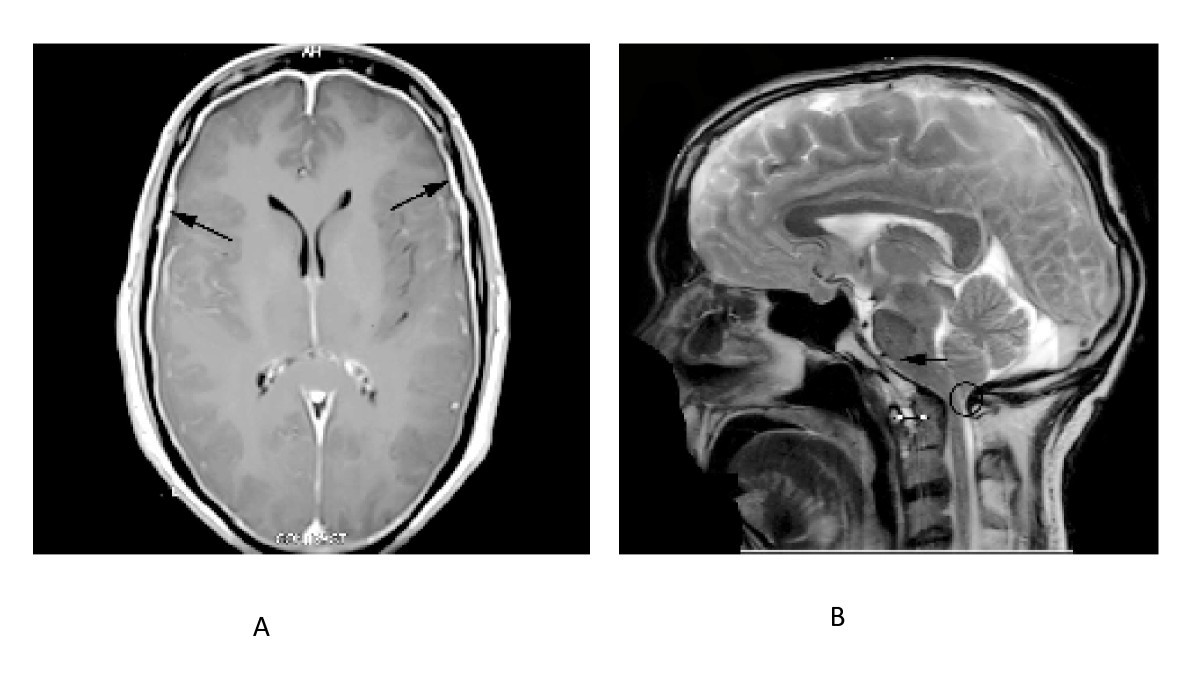
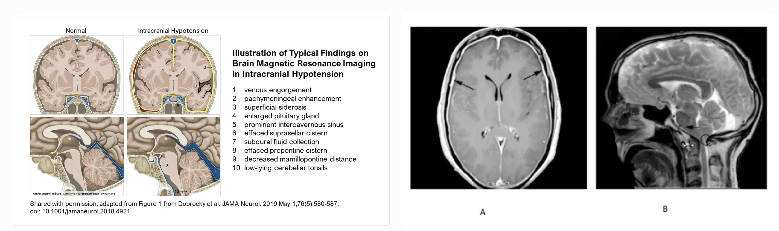
(Images above show brain MRI findings in dural tear/CSF leak — pachymeningeal enhancement, brain sagging, and typical signs of intracranial hypotension.)
Causes
Dural tears can result from:
- Medical procedures (lumbar puncture, spinal or epidural anesthesia, spinal surgery)
- Trauma or head/spinal injury
- Spontaneous tear due to connective tissue weakness (e.g., Marfan syndrome, Ehlers-Danlos syndrome)
- Increased pressure inside the skull or degenerative spinal changes
Symptoms
Common symptoms of dural tear and resulting CSF leak include:
- Severe headache that is much worse when upright (orthostatic headache) and improves when lying flat
- Neck pain or stiffness
- Nausea, vomiting, or dizziness
- Ringing in the ears (tinnitus), hearing changes, or visual disturbances
- Clear watery fluid leaking from the nose (CSF rhinorrhea) or ear (CSF otorrhea)
- Fatigue, brain fog, or changes in cognition
- In severe cases: cranial nerve issues or risk of infection (meningitis)
Homeopathy Medicines with Key Symptoms and Doses
Homeopathic remedies for dural tear/CSF leak are selected based on the prominent symptoms, especially the characteristic postural headache and individual constitution. They may provide supportive relief. Remedy selection must be determined only by a qualified homeopath after detailed case-taking, in close coordination with a neurologist or neurosurgeon. These are general guidelines only. Bed rest, hydration, and medical interventions (e.g., epidural blood patch) are often required.
Bryonia Alba For headache that is markedly worse from any movement and better from absolute rest or pressure. The person wants to lie still. Typical use: 30C, 3-5 pellets 1-2 times daily.
Gelsemium Sempervirens For dizziness, heaviness of the head, and weakness with drooping eyelids. Headache often follows exertion or fright. Typical use: 30C, 3-5 pellets 1-2 times daily.
Silicea Useful in cases with slow healing tendency, sensitivity to cold, and chronic weakness after dural injury. Typical use: 6X or 30C, 3-5 pellets 1-2 times daily.
Hypericum Perforatum For sharp, shooting nerve pain or headache following trauma or spinal injury involving the dura. Typical use: 30C, 3-5 pellets 1-2 times daily.
Arnica Montana For soreness, bruised feeling, and headache after trauma or procedural injury to the spine or head. Typical use: 30C, 3-5 pellets 1-2 times daily (short term).
Natrum Sulphuricum For headache and symptoms worsened by damp weather or head injury. Useful when there is fluid-related imbalance. Typical use: 30C, 3-5 pellets 1-2 times daily.
Arsenicum Album For burning or anxious headache with restlessness and chilliness. The person feels better from warmth. Typical use: 30C, 3-5 pellets 1-2 times daily (short term).
Conium Maculatum For vertigo and dizziness that worsens on turning the head or rising from lying down. Typical use: 30C, 3-5 pellets 1-2 times daily.
Ruta Graveolens For bruised, aching sensation in the head or spine after injury with stiffness. Typical use: 30C, 3-5 pellets 1-2 times daily.
Sulphur Often used as an intercurrent remedy in chronic cases with burning sensations or when well-selected remedies do not hold. Typical use: 30C or 200C, sparingly (once weekly under guidance).
Important guidance: A dural tear with CSF leak is a serious condition that can lead to complications like meningitis or persistent low-pressure headache. Diagnosis usually requires MRI with contrast or CT myelogram. Treatment may include strict bed rest, hydration, caffeine, or an epidural blood patch. In some cases, surgical repair is needed. Homeopathy may offer supportive symptom relief but must never replace urgent medical or neurosurgical care. Avoid straining, coughing, or lifting until cleared by a doctor. This information is for educational purposes only and not a substitute for professional medical or homeopathic advice. Consult a qualified neurologist or neurosurgeon immediately for accurate diagnosis and management, and a registered homeopath only for individualized supportive remedy selection after the acute phase is stabilized. Early intervention improves outcomes significantly.