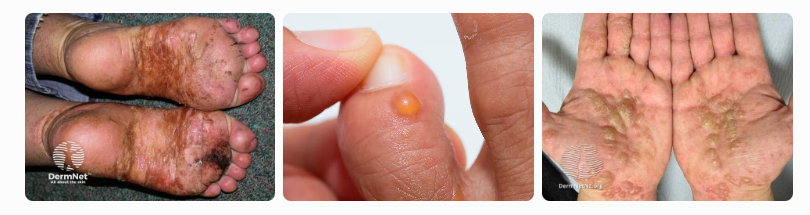
Dyshidrosis (also known as Dyshidrotic Eczema or Pompholyx) is a chronic skin condition characterized by sudden outbreaks of small, deep-seated, intensely itchy blisters on the palms of the hands, sides of the fingers, and sometimes the soles of the feet. The blisters often look like tapioca pearls and can cause significant discomfort. After the blisters dry up, the skin may crack, peel, or become thick and scaly. In homeopathy, remedies are used only as supportive care to reduce itching, inflammation, and blistering tendency while improving skin health. Dyshidrosis often requires conventional dermatological management and trigger avoidance.
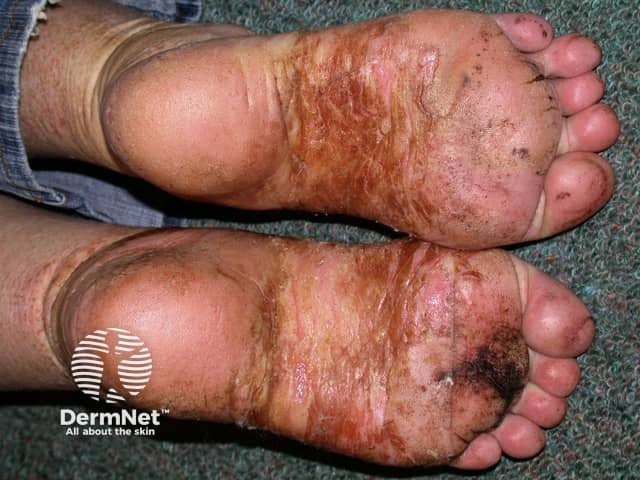
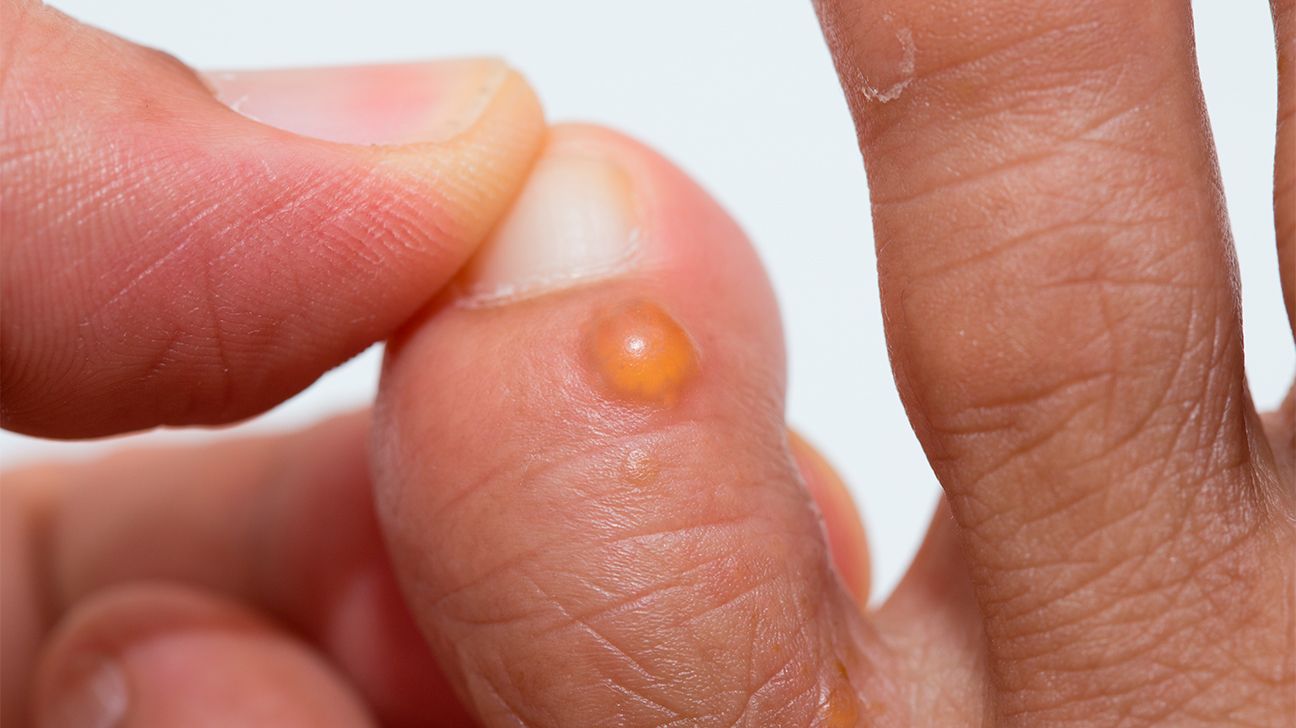
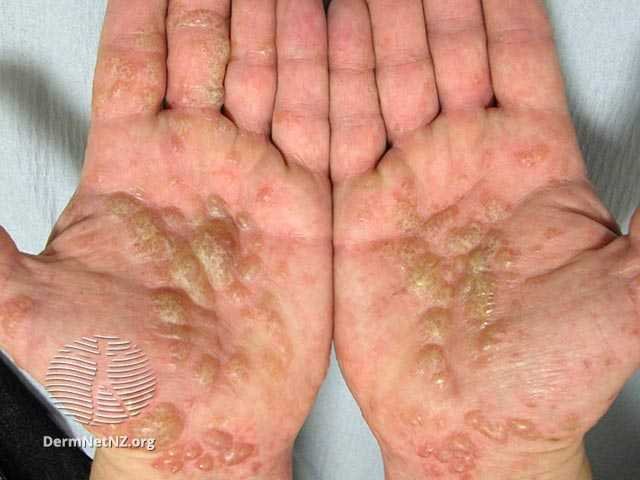
(Images above show classic dyshidrosis — small deep blisters on sides of fingers, palms, and soles, with later cracking and peeling.)
Causes
The exact cause is not fully understood, but common triggers and associations include:
- Stress, emotional tension, or seasonal changes
- Excessive sweating (hyperhidrosis) or moist hands/feet
- Contact with irritants like metals (nickel, cobalt), soaps, detergents, or chemicals
- Allergies or atopic background (history of eczema, hay fever, or asthma)
- Fungal infections elsewhere on the body
Symptoms
Typical symptoms include:
- Sudden appearance of small, clear, deep-seated itchy blisters (vesicles) on palms, finger sides, or soles
- Intense itching or burning sensation before or during outbreaks
- Blisters may merge into larger ones and then dry up
- Redness, swelling, cracking, peeling, or thick scaly skin after blisters resolve
- Recurrent episodes, often lasting 2–4 weeks
- Pain or difficulty using hands/feet in severe cases
Homeopathy Medicines with Key Symptoms and Doses
Homeopathic remedies for dyshidrosis are chosen according to the individual symptom picture, itching character, skin appearance, and triggers. The following are commonly considered for supportive management. Remedy selection must be determined only by a qualified homeopath after detailed case-taking, in coordination with a dermatologist. These are general guidelines only.
Natrum Muriaticum For small vesicles with intense itching and burning, especially on palms and sides of fingers. Often linked to emotional stress or grief; the person craves salt. Typical use: 30C, 3-5 pellets 1-2 times daily.
Graphites Useful when there is sticky, honey-like discharge from blisters, thick cracked skin, and rough eruptions. Itching is worse at night. Typical use: 30C, 3-5 pellets 1-2 times daily.
Sulphur For intense burning and itching worse from heat or at night. Skin looks unhealthy or dirty; often used as an intercurrent remedy in chronic cases. Typical use: 30C or 200C, sparingly (once weekly under guidance).
Arsenicum Album For burning sensations with great anxiety and restlessness. The person feels chilly but better from warmth; symptoms worse at night. Typical use: 30C, 3-5 pellets 1-2 times daily (short term).
Rhus Toxicodendron For itchy, blistering eruptions with restlessness. Symptoms improve with warm applications and continued gentle motion. Typical use: 30C, 3-5 pellets 1-2 times daily.
Petroleum For deep cracks and fissures with thick, hard skin and intense itching. Skin feels very dry and rough; worse in winter. Typical use: 30C, 3-5 pellets 1-2 times daily.
Mezereum For violent itching with thick crusts or oozing after scratching. Eruptions may have white scales or honey-like discharge. Typical use: 30C, 3-5 pellets 1-2 times daily.
Silicea Helpful in chronic cases with slow healing, tendency to suppuration, or recurrent outbreaks. Supports skin and tissue strength. Typical use: 6X or 30C, 3-5 pellets 1-2 times daily.
Calcarea Carbonica Suited to fair, sweaty persons with clammy hands and tendency to skin eruptions. Supports constitutional weakness. Typical use: 30C or 200C, 3-5 pellets once or twice weekly.
Urtica Urens For stinging, burning, or nettle-like itching with small vesicles. Symptoms may appear suddenly. Typical use: 30C, 3-5 pellets 1-2 times daily.
Important guidance: Management of dyshidrosis includes avoiding known triggers (stress, irritants, excessive moisture), using moisturizers, and sometimes topical steroids or light therapy as prescribed by a dermatologist. Homeopathy may help reduce itching, blistering, and recurrence as supportive care but must not replace proper diagnosis and conventional treatment if needed. Keep hands and feet dry, use gentle soaps, and protect skin from irritants. This information is for educational purposes only and not a substitute for professional medical or homeopathic advice. Consult a qualified dermatologist for accurate diagnosis and management, and a registered homeopath for individualized supportive remedy selection. With proper care, most people can control symptoms effectively.