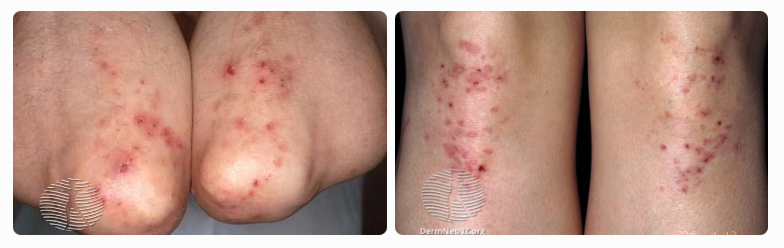
Dermatitis Herpetiformis (also known as Duhring’s disease) is a chronic autoimmune skin condition characterized by an intensely itchy, blistering rash. It is strongly linked to celiac disease (gluten sensitivity) and is considered the skin manifestation of gluten intolerance. Even small amounts of gluten can trigger the immune system to attack the skin, leading to the formation of IgA deposits in the dermal papillae. The rash is very uncomfortable and often symmetrical. In homeopathy, remedies are selected to provide supportive relief from itching, burning, and blistering while addressing the underlying sensitivity, but homeopathy is not a substitute for a strict gluten-free diet and medical management.

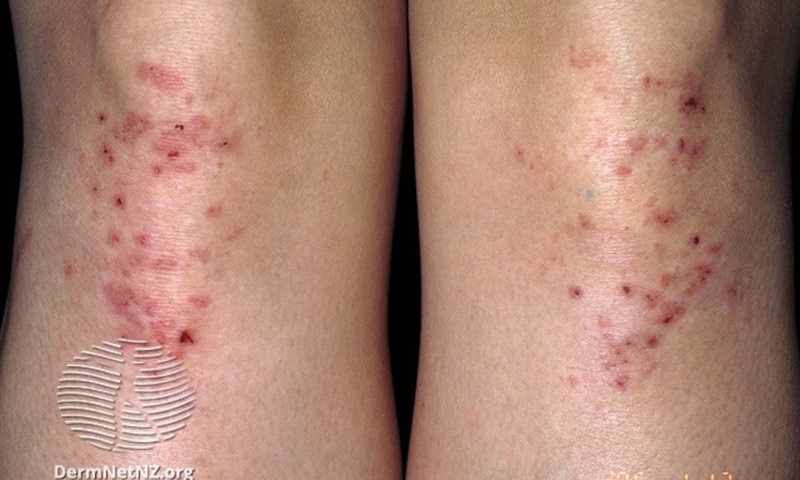
(Images above show classic features of Dermatitis Herpetiformis — clusters of intensely itchy red papules, vesicles, and excoriations, commonly on the elbows, knees, buttocks, and back.)
Causes
Dermatitis Herpetiformis is an autoimmune reaction triggered by:
- Gluten ingestion in people with celiac disease or gluten sensitivity
- Genetic predisposition (HLA-DQ2 or HLA-DQ8 genes)
- Immune system producing IgA antibodies that deposit in the skin
- It is not caused by the herpes virus despite the name “herpetiformis”
Symptoms
Typical symptoms include:
- Extremely itchy, burning, or stinging sensation (often worse at night)
- Clusters of small red bumps (papules) and fluid-filled blisters (vesicles)
- Lesions that are scratched and become excoriated or crusted
- Symmetrical distribution — elbows, knees, buttocks, shoulders, scalp, and lower back
- In some cases: oral blisters or gastrointestinal symptoms of celiac disease
Homeopathy Medicines with Key Symptoms and Doses
Homeopathic remedies are chosen according to the individual symptom picture, itching character, and constitution. The following are commonly considered for supportive management of Dermatitis Herpetiformis. Remedy selection must be determined only by a qualified homeopath after detailed case-taking, in coordination with a dermatologist. A strict gluten-free diet is the cornerstone of long-term management. These are general guidelines only.
Natrum Muriaticum One of the top remedies when there are burning spots or blisters with intense itching. The person may have a history of grief or emotional suppression and craves salt. Typical use: 30C, 3-5 pellets 1-2 times daily.
Sulphur Indicated for intensely itchy eruptions that are worse from heat or at night. The skin looks unhealthy or dirty; scratching leads to burning. Often used as an intercurrent remedy. Typical use: 30C or 200C, sparingly (once weekly under guidance).
Rhus Toxicodendron Useful for itchy, blistering eruptions with restlessness. Symptoms improve with warmth and continued motion; the person feels better from hot applications. Typical use: 30C, 3-5 pellets 1-2 times daily.
Graphites For thick, sticky eruptions with honey-like discharge and cracking skin. Itching and burning are prominent; suited to constipated persons with dry skin. Typical use: 30C, 3-5 pellets 1-2 times daily.
Apis Mellifica For swollen, puffy, stinging or burning blisters that are relieved by cold applications. The skin looks shiny and red. Typical use: 30C, 3-5 pellets 1-2 times daily.
Arsenicum Album For burning, itching with great anxiety and restlessness. The person feels chilly but better from warmth; symptoms often worse at night. Typical use: 30C, 3-5 pellets 1-2 times daily.
Mercurius Solubilis For moist, itchy eruptions with offensive discharge or swollen glands. Symptoms worsen at night and with temperature changes. Typical use: 30C, 3-5 pellets 1-2 times daily (short term).
Ruta Graveolens For painful, bruised sensations with stiffness in affected areas. Useful when there is involvement of tendons or deeper tissues. Typical use: 30C, 3-5 pellets 1-2 times daily.
Thuja Occidentalis Indicated when there is a history of vaccinations or viral influences with abnormal skin growths or warts-like tendencies. Typical use: 30C, 3-5 pellets 1-2 times daily (short courses).
Sulphur (repeated for emphasis in chronic cases) Helps when well-selected remedies fail or when there is a strong tendency to skin eruptions with heat aggravation. Typical use: 30C or 200C, sparingly (once weekly under guidance).
Important guidance: The primary and most effective long-term treatment for Dermatitis Herpetiformis is a strict lifelong gluten-free diet, which usually clears the rash over time. Dapsone (a prescription medicine) is often used for rapid symptom control. Homeopathy may help reduce itching and support skin healing but must not replace medical diagnosis, gluten avoidance, or dermatological care. Regular follow-up with a dermatologist and gastroenterologist is essential to monitor for celiac disease complications. This information is for educational purposes only and not a substitute for professional medical or homeopathic advice. Consult a qualified dermatologist for accurate diagnosis and management, and a registered homeopath for individualized remedy selection. A gluten-free diet combined with proper care can significantly improve quality of life.