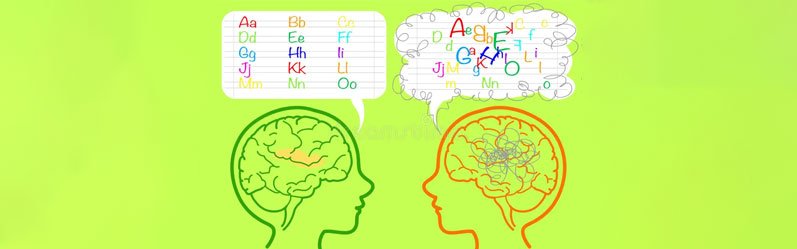
Dysgraphia is a specific learning difficulty that affects a person’s ability to write. It is not related to intelligence — children and adults with dysgraphia often have average or above-average IQ but struggle with the physical act of writing, organizing thoughts on paper, or maintaining neat handwriting. It can make schoolwork, note-taking, and daily tasks challenging. In homeopathy, remedies are selected to support fine motor coordination, concentration, confidence, and nervous system function as supportive care only. It works best along with occupational therapy, special writing techniques, and educational support.

(Images above illustrate dysgraphia — difficulty forming letters, messy or inconsistent handwriting, pain while writing, and the struggle to translate thoughts into written form.)
Causes
Dysgraphia is mainly caused by:
- Differences in brain processing of motor skills and spatial awareness
- Genetic factors (often runs in families with other learning difficulties like dyslexia)
- Developmental coordination disorder or fine motor skill delays
- In some cases, it may be associated with ADHD or neurological conditions
It is not caused by laziness or lack of practice.
Symptoms
Common symptoms include:
- Messy, illegible, or inconsistent handwriting
- Difficulty forming letters or spacing words properly
- Slow writing speed and quick fatigue while writing
- Pain or cramping in the hand/wrist during writing
- Trouble organizing thoughts on paper (ideas are clear in mind but hard to write)
- Avoidance of writing tasks or poor performance in written exams
- Good oral expression but poor written expression
Homeopathy Medicines with Key Symptoms and Doses
Homeopathic remedies for dysgraphia are chosen according to the child’s individual constitution, fine motor difficulties, emotional state, and associated symptoms. The following are commonly considered for supportive management. Remedy selection must be determined only by a qualified homeopath experienced in pediatric learning and developmental disorders after detailed case-taking. These are general guidelines only.
Baryta Carbonica Indicated for children with delayed development, slow learning, and poor fine motor coordination. The child may appear timid and have difficulty with writing and concentration. Typical use: 30C or 200C, 3-5 pellets once or twice weekly (sparingly).
Silicea Helpful for delicate, sensitive children with poor coordination, weak grip, and slow assimilation. Supports nervous system strength and confidence in writing. Typical use: 6X or 30C, 3-5 pellets 1-2 times daily (monitor closely).
Calcarea Carbonica Suited to fair, sweaty, chubby children who tire easily from mental and physical effort. Supports constitutional weakness and slow motor development. Typical use: 30C or 200C, 3-5 pellets once or twice weekly.
Ruta Graveolens For stiffness, pain, or fatigue in the hand and wrist while writing. Useful when there is a sensation of bruising or strain from writing. Typical use: 30C, 3-5 pellets 1-2 times daily.
Agaricus Muscarius Indicated for twitching, jerking, or clumsy hand movements with poor coordination. The child may have neurological symptoms affecting writing. Typical use: 30C, 3-5 pellets 1-2 times daily.
Lycopodium Clavatum For lack of self-confidence, anticipatory anxiety before writing tasks, and digestive weakness. The child knows the answer but struggles to write it. Typical use: 30C or 200C, 3-5 pellets 1-2 times daily.
Natrum Muriaticum For emotionally reserved children who suppress feelings and have difficulty expressing themselves in writing. Typical use: 30C, 3-5 pellets 1-2 times daily.
Anacardium Orientale Useful when there is a feeling of mental block or two conflicting wills while writing. Poor memory for written work. Typical use: 30C, 3-5 pellets 1-2 times daily.
Calcarea Phosphorica Supports bone and muscle development with growing pains and weakness. Helps in slow motor skill acquisition. Typical use: 6X or 30C, 3-5 pellets 1-2 times daily.
Gelsemium For trembling hands, weakness, and heaviness while writing, often with nervousness or stage fright before tasks. Typical use: 30C, 3-5 pellets 1-2 times daily.
Important guidance: Dysgraphia requires specialized educational support — occupational therapy, multisensory writing programs, use of keyboard or speech-to-text tools, and extra time in exams. Early intervention greatly improves outcomes. Homeopathy may help improve fine motor control, concentration, and confidence as supportive care but cannot cure the condition. Focus on building the child’s strengths and reducing frustration. This information is for educational purposes only and not a substitute for professional medical or homeopathic advice. Consult a qualified pediatrician or neurologist for assessment and a registered homeopath experienced in learning difficulties for individualized remedy selection. With the right support, children with dysgraphia can succeed academically and creatively.