Diabetic Ketoacidosis (DKA) is a serious, life-threatening complication of diabetes that occurs when the body cannot use glucose for energy due to lack of insulin. It starts breaking down fat rapidly, producing high levels of ketones (acids) in the blood, leading to severe acidity (acidosis). DKA develops quickly and requires immediate emergency hospital treatment with intravenous fluids, insulin, and electrolyte correction. In homeopathy, remedies are used only as supportive care after stabilization to help reduce symptoms, support recovery, and manage associated weakness. Homeopathy cannot treat or prevent DKA on its own.
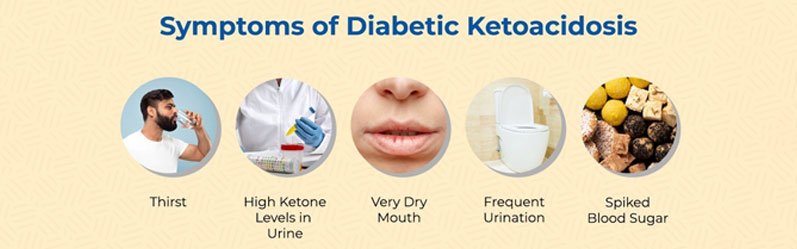
(Images above show how diabetic ketoacidosis develops — lack of insulin leads to fat breakdown, ketone production, acidosis, and symptoms like dehydration and rapid breathing.)
Causes
DKA is mainly caused by:
- Severe insulin deficiency (common in Type 1 diabetes or advanced Type 2)
- Missed insulin doses or pump failure
- Infection, illness, surgery, or stress that increases insulin demand
- New-onset undiagnosed diabetes
Symptoms
Early warning signs include:
- Excessive thirst and frequent urination
- High blood sugar levels
- Fruity-smelling breath (acetone)
- Nausea, vomiting, and abdominal pain
Later symptoms:
- Rapid, deep breathing (Kussmaul breathing)
- Extreme tiredness and weakness
- Dry mouth, flushed skin, and dehydration
- Confusion, drowsiness, or coma if untreated
Homeopathy Medicines with Key Symptoms and Doses
Homeopathic remedies are selected based on the individual’s symptom picture and constitution. They may be used supportively after emergency medical stabilization. The following are sometimes considered in classical homeopathy for DKA-related symptoms. Remedy selection must be determined only by a qualified homeopath after full case evaluation, in close coordination with a diabetologist or emergency physician. These are general guidelines only. Never use homeopathy alone for DKA.
Arsenicum Album Indicated for extreme weakness, anxiety, restlessness, and burning sensations with thirst for small sips of water. The person feels chilly and symptoms are worse at night. Typical use: 30C, 3-5 pellets every 2–4 hours during acute weakness (taper quickly under supervision).
Phosphoric Acid Useful for profound mental and physical exhaustion with frequent urination and debility. The person feels indifferent and apathetic. Typical use: 30C, 3-5 pellets 1-2 times daily.
Veratrum Album For collapse-like state with cold sweat, profuse watery diarrhea or vomiting, and icy coldness. The person may have cramps and rapid breathing. Typical use: 30C, 3-5 pellets 1-2 times daily (in collapse states under guidance).
Carbo Vegetabilis For extreme exhaustion, coldness, and desire for fanning. The person feels faint with bloating and air hunger. Typical use: 30C, 3-5 pellets 1-2 times daily.
China Officinalis Helpful for marked weakness and debility after loss of fluids. Bloating and flatulence are prominent; the person feels exhausted. Typical use: 30C, 3-5 pellets 1-2 times daily.
Ipecacuanha For constant nausea and vomiting that does not relieve the nausea. Tongue is clean despite symptoms. Typical use: 30C, 3-5 pellets 1-2 times daily (short term).
Nux Vomica For irritability and digestive disturbance with frequent urging. Useful when stress or irregular habits trigger the episode. Typical use: 30C, 3-5 pellets 1-2 times daily.
Phosphorus For weakness with burning sensations and a tendency to bleeding. The person may crave cold drinks. Typical use: 30C, 3-5 pellets 1-2 times daily (use cautiously).
Lycopodium Clavatum For bloating, gas, and right-sided symptoms with lack of confidence. Digestive weakness is prominent. Typical use: 30C or 200C, 3-5 pellets 1-2 times daily.
Sulphur Often used as an intercurrent remedy in chronic diabetic cases with burning sensations and unhealthy skin tendency. Typical use: 30C or 200C, sparingly (once weekly under guidance).
Important guidance: Diabetic Ketoacidosis is a medical emergency. If you suspect DKA (high blood sugar, fruity breath, rapid breathing, vomiting, or confusion), go to the hospital immediately — it can be fatal without prompt treatment. Prevention involves regular blood sugar monitoring, never skipping insulin, and seeking help during illness. Homeopathy may support recovery after stabilization but must never replace emergency medical care, insulin therapy, or fluids. This information is for educational purposes only and not a substitute for professional medical or homeopathic advice. Consult a qualified diabetologist or emergency physician immediately for any suspected DKA, and a registered homeopath only for supportive care after the acute phase. Good diabetes control prevents such complications.