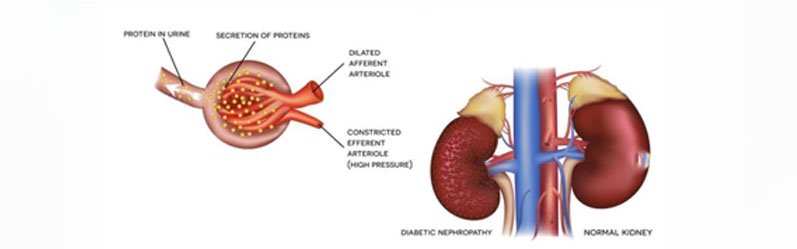
Diabetic Nephropathy (also known as Diabetic Kidney Disease) is a serious complication of long-standing diabetes in which high blood sugar damages the tiny blood vessels (glomeruli) in the kidneys. Over time, this leads to protein leakage in urine (proteinuria), declining kidney function, and eventually chronic kidney disease or kidney failure. It is one of the leading causes of end-stage renal disease requiring dialysis or transplant. In homeopathy, remedies are used only as supportive care to help improve kidney function, reduce protein loss, and support overall vitality. Strict blood sugar and blood pressure control are essential. Homeopathy does not replace conventional medical management.
(Images above show how diabetes damages the kidneys — normal glomeruli versus damaged filtering units with protein leakage and reduced kidney function.)
Causes
The main cause is prolonged high blood sugar that injures the small blood vessels and filtering units (glomeruli) of the kidneys. Risk factors include:
- Poorly controlled diabetes (high HbA1c for many years)
- High blood pressure
- Genetic predisposition
- Smoking, obesity, and high cholesterol
- Duration of diabetes (usually appears after 10–15 years)
Symptoms
In early stages, there are usually no symptoms. As it progresses, common symptoms include:
- Foamy or frothy urine (due to protein leakage)
- Swelling in the legs, ankles, feet, or around the eyes (edema)
- High blood pressure
- Fatigue, weakness, and loss of appetite
- Frequent urination at night
- In advanced stages: nausea, shortness of breath, itching, and anemia
Homeopathy Medicines with Key Symptoms and Doses
Homeopathic remedies are selected based on the individual’s symptoms, stage of kidney damage, and constitution. The following are commonly considered for supportive management of diabetic nephropathy. Remedy selection must be determined only by a qualified homeopath after detailed case-taking, in close coordination with a nephrologist. These are general guidelines only. Regular monitoring of kidney function (creatinine, eGFR, urine albumin) is mandatory.
Arsenicum Album Indicated for great weakness, anxiety, and restlessness with swelling and burning sensations. The person feels chilly and wants small sips of water. Typical use: 30C, 3-5 pellets 1-2 times daily.
Lycopodium Clavatum Useful in cases with right-sided symptoms, bloating, and digestive weakness. There is frequent urination and swelling, especially in the evening. Typical use: 30C or 200C, 3-5 pellets 1-2 times daily.
Apis Mellifica For swelling (edema) with stinging or burning pain that is better from cold applications. Urine may be scanty. Typical use: 30C, 3-5 pellets 1-2 times daily.
Phosphorus For early protein leakage with weakness and tendency to bleeding. The person may crave cold drinks and feel hungry at night. Typical use: 30C, 3-5 pellets 1-2 times daily (use cautiously).
Calcarea Carbonica Suited to fair, sweaty persons with constitutional weakness, swelling, and fatigue. Supports slow, sluggish kidney function. Typical use: 30C or 200C, 3-5 pellets once or twice weekly.
Natrum Sulphuricum Indicated when symptoms worsen in damp weather. Helps with fluid retention and kidney involvement in diabetic patients. Typical use: 30C, 3-5 pellets 1-2 times daily.
Serum Anguillae (Eel Serum) A specific remedy used in homeopathy for kidney damage with albuminuria and high blood pressure. Supports kidney function in diabetic nephropathy. Typical use: 30C or 6X, 3-5 pellets 1-2 times daily (under guidance).
Plumbum Metallicum For chronic cases with progressive kidney weakness, high blood pressure, and leaden heaviness. Useful in advanced stages. Typical use: 30C, 3-5 pellets 1-2 times daily (under expert guidance).
Aurum Metallicum For kidney damage with high blood pressure and depression. The person may have a history of heart or vascular complications. Typical use: 30C or 200C, sparingly (once or twice weekly).
Sulphur Often used as an intercurrent remedy when there is burning, itching, or unhealthy skin tendency along with kidney involvement. Typical use: 30C or 200C, sparingly (once weekly under guidance).
Important guidance: The cornerstone of managing diabetic nephropathy is strict blood sugar control, blood pressure control (target <130/80 mmHg), and use of ACE inhibitors or ARBs as prescribed by the doctor. Regular monitoring of kidney function is vital. In advanced stages, dialysis or kidney transplant may be needed. Homeopathy may offer supportive benefits for symptoms and vitality but cannot replace conventional nephrology care. Maintain a low-protein diet (as advised), control salt intake, avoid smoking, and stay hydrated. This information is for educational purposes only and not a substitute for professional medical or homeopathic advice. Consult a qualified nephrologist immediately for proper diagnosis and treatment, and a registered homeopath for individualized supportive remedy selection. Early intervention can slow the progression of kidney damage significantly.