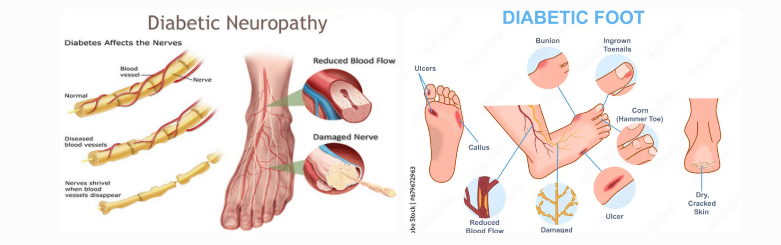
Diabetic Neuropathy is a common complication of long-standing or poorly controlled diabetes mellitus. It occurs when high blood sugar levels damage the nerves over time, most often affecting the peripheral nerves in the legs and feet (peripheral neuropathy). It can also involve nerves in the heart, digestive system, or other areas. In homeopathy, remedies are selected to support nerve health, reduce pain, tingling, and numbness, and improve overall vitality as supportive care only. It must always be used along with strict blood sugar control and conventional medical management.
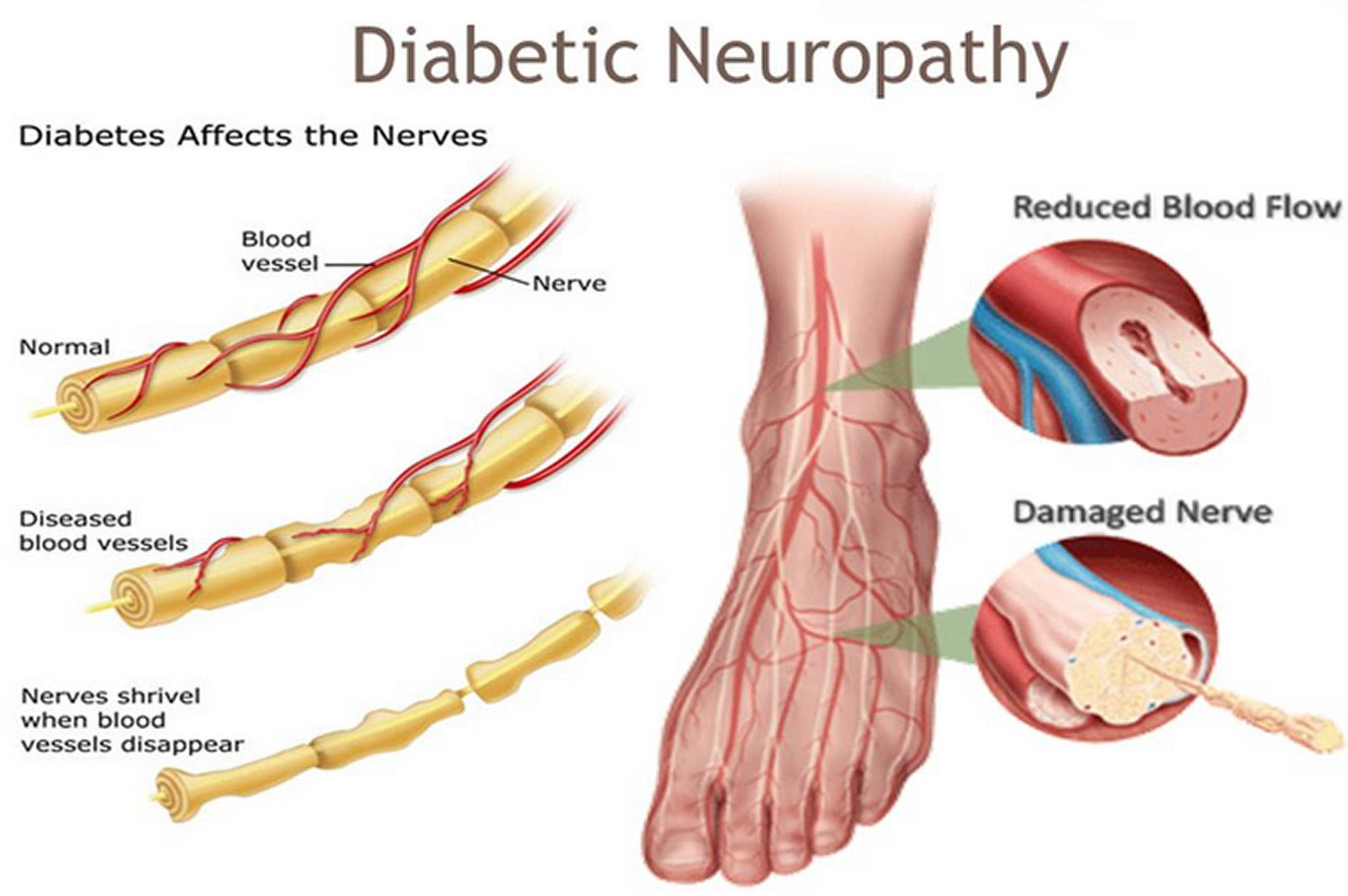

(Images above illustrate diabetic neuropathy — damage to nerves due to high blood sugar, reduced blood flow, numbness, tingling, and burning pain, commonly affecting the feet and legs.)
Causes
The main cause is prolonged high blood sugar (hyperglycemia) that damages the small blood vessels supplying the nerves. Risk factors include:
- Poorly controlled diabetes (high HbA1c)
- Long duration of diabetes
- High blood pressure and high cholesterol
- Smoking, obesity, and alcohol use
Symptoms
Common symptoms (often start in the feet and legs, then hands) include:
- Tingling, burning, or “pins and needles” sensation
- Numbness or loss of feeling (can lead to unnoticed injuries)
- Sharp, shooting, or stabbing pain (especially at night)
- Muscle weakness or cramps
- Loss of balance or coordination
- In advanced cases: digestive issues, dizziness on standing, or sexual dysfunction
Homeopathy Medicines with Key Symptoms and Doses
Homeopathic remedies are chosen according to the individual’s specific symptoms, constitution, and modalities. The following are commonly considered for supportive management of diabetic neuropathy. Remedy selection must be determined only by a qualified homeopath after detailed case-taking, in coordination with a diabetologist or neurologist. These are general guidelines only.
Hypericum Perforatum One of the best remedies for nerve pain with sharp, shooting, or electric-shock-like sensations. Useful when there is tingling or numbness after nerve damage. Typical use: 30C, 3-5 pellets 1-2 times daily.
Arsenicum Album For burning pains with great anxiety and restlessness. The person feels chilly but better from warmth; symptoms often worse at night. Typical use: 30C, 3-5 pellets 1-2 times daily.
Phosphorus Indicated for burning sensations in the hands and feet with numbness. The person may crave cold drinks and feel weak. Typical use: 30C, 3-5 pellets 1-2 times daily (use cautiously).
Plumbum Metallicum For progressive muscle weakness, paralysis-like feelings, and shooting pains with atrophy. Useful in chronic cases with leaden heaviness. Typical use: 30C, 3-5 pellets 1-2 times daily (under guidance).
Secale Cornutum Helpful for burning pains with coldness of the extremities (ice-cold but feels better from cold applications). Dry gangrene-like tendency in severe cases. Typical use: 30C, 3-5 pellets 1-2 times daily.
Lycopodium Clavatum For right-sided symptoms, digestive weakness, and lack of confidence. Tingling and numbness with bloating. Typical use: 30C or 200C, 3-5 pellets 1-2 times daily.
Nux Vomica Useful when neuropathy is linked to stress, overwork, or sedentary habits. The person is irritable with digestive complaints. Typical use: 30C, 3-5 pellets 1-2 times daily.
Calcarea Carbonica For fair, sweaty persons with muscle weakness, cramps, and constitutional tiredness. Supports overall vitality. Typical use: 30C or 200C, 3-5 pellets once or twice weekly.
Rhus Toxicodendron For stiffness and pain that improves with continued movement and warmth. Restlessness is prominent. Typical use: 30C, 3-5 pellets 1-2 times daily.
Sulphur Often used as an intercurrent remedy for burning, itching sensations with unhealthy skin tendency. Symptoms worse from heat. Typical use: 30C or 200C, sparingly (once weekly under guidance).
Important guidance: Strict blood sugar control is the most important step to prevent progression of diabetic neuropathy. Regular foot care, proper footwear, and checking for injuries are essential. Conventional treatment may include medications for nerve pain (pregabalin, duloxetine, etc.), vitamins (B12, alpha-lipoic acid), and physiotherapy. Homeopathy can provide supportive relief for pain and symptoms but must never replace medical management. If you have numbness, non-healing wounds, or sudden weakness, consult a doctor immediately. This information is for educational purposes only and not a substitute for professional medical or homeopathic advice. Consult a qualified diabetologist/neurologist for proper management and a registered homeopath for individualized remedy selection. Good control of diabetes can slow or stop nerve damage.