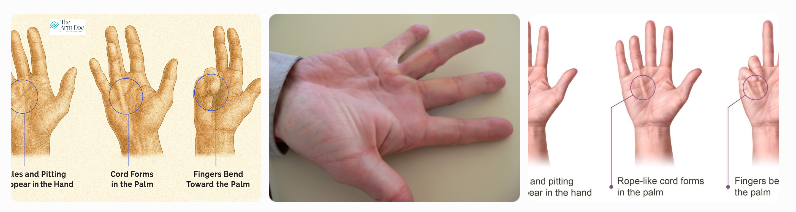
Dupuytren’s Contracture is a chronic condition in which the connective tissue (fascia) under the skin of the palm thickens and forms tight cords. Over time, these cords pull one or more fingers (usually the ring and little fingers) into a bent position toward the palm. It progresses slowly and can make it difficult to straighten the fingers or use the hand properly. In homeopathy, remedies are selected to support tissue flexibility, reduce thickening, and improve hand function as supportive care only. There is no cure for the condition, and advanced cases may require surgery or other medical procedures.
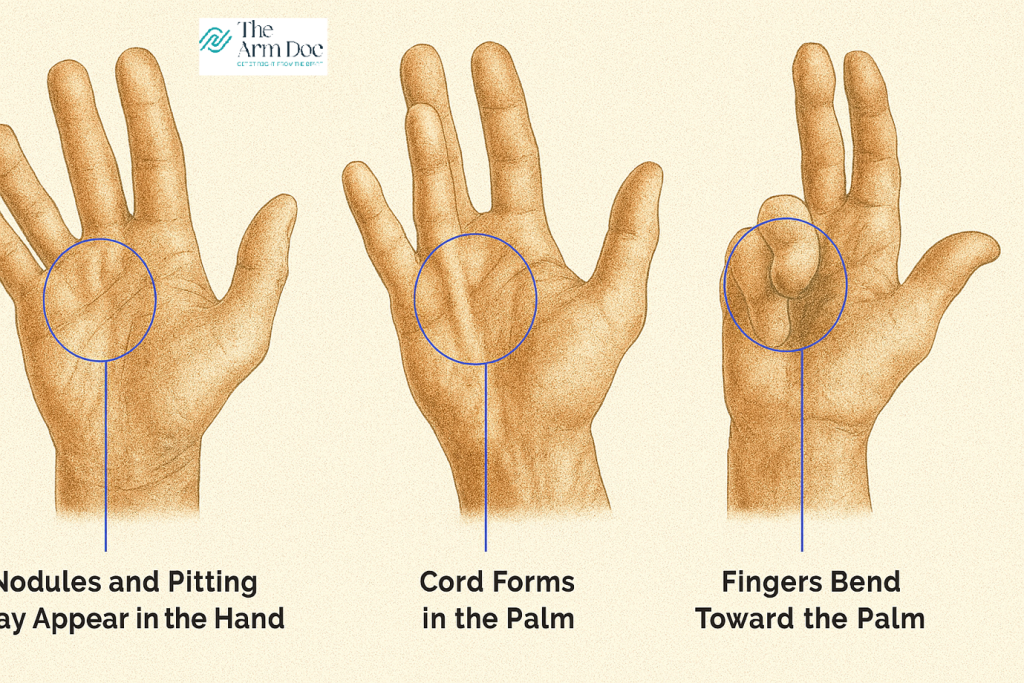

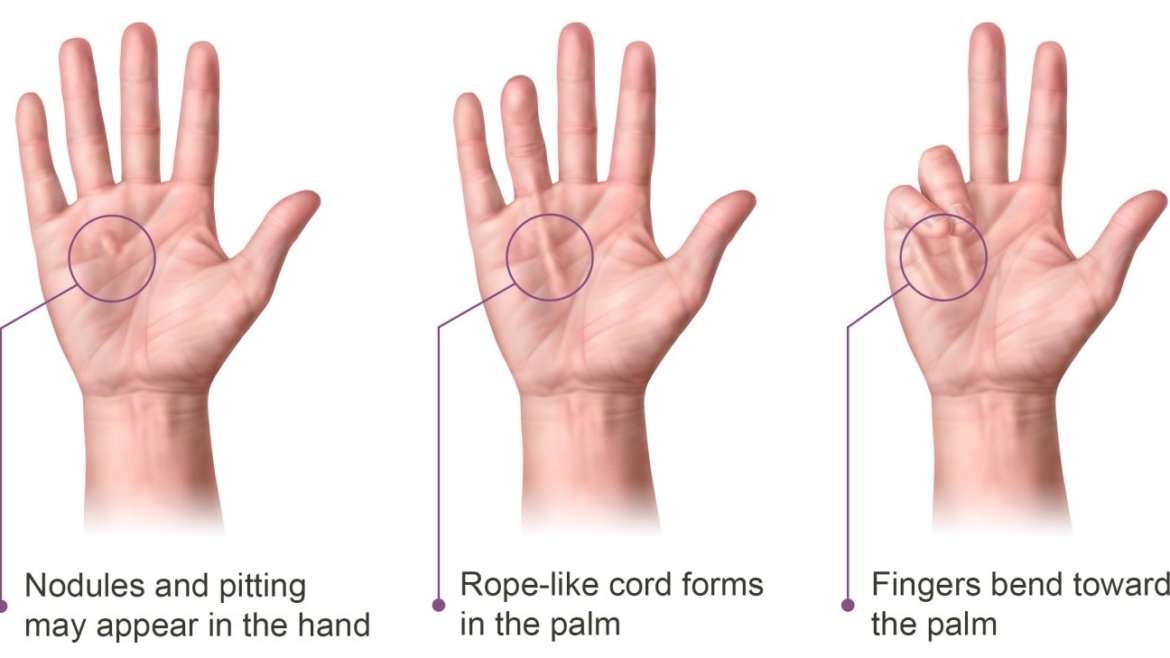
(Images above show the typical progression of Dupuytren’s contracture — nodules and pitting in the palm, formation of rope-like cords, and bending of fingers toward the palm.)
Causes
The exact cause is not fully known, but contributing factors include:
- Genetic predisposition (more common in people of Northern European descent)
- Age (usually starts after 50 years)
- Family history
- Smoking, heavy alcohol use, and diabetes
- Certain medications or repetitive hand trauma (possible association)
Symptoms
Common symptoms develop gradually:
- Small, painless nodules or lumps in the palm
- Thickened skin or pitting (dimpling) on the palm
- Formation of tight cords under the skin
- Difficulty straightening the fingers (especially ring and little finger)
- Fingers gradually bend toward the palm (contracture)
- In later stages: difficulty using the hand for gripping objects
Homeopathy Medicines with Key Symptoms and Doses
Homeopathic remedies are chosen according to the individual’s symptoms and constitution. The following are sometimes considered for supportive management of Dupuytren’s contracture. Remedy selection must be determined only by a qualified homeopath experienced in chronic connective tissue conditions after detailed case-taking. These are general guidelines only.
Causticum Indicated for progressive contractures with stiffness and weakness of muscles and tendons. The person feels the hand is tight and drawn; useful in cases with burning or raw sensations. Typical use: 30C, 3-5 pellets 1-2 times daily.
Thiosinaminum A specific remedy for dissolving scar tissue and fibrous cords. Helps soften hard nodules and tight bands in the palm. Typical use: 30C, 3-5 pellets 1-2 times daily.
Ruta Graveolens Useful for thickening and contracture involving tendons and ligaments. Pain and stiffness are prominent, especially after overuse of the hand. Typical use: 30C, 3-5 pellets 1-2 times daily.
Calcarea Fluorica Supports elasticity of connective tissue and helps reduce hardening of fascia and cords. Useful in chronic cases with stony-hard nodules. Typical use: 6X or 30C, 3-5 pellets 1-2 times daily.
Graphites Indicated when there is thickening of skin with sticky or honey-like discharge from cracks. Suited to dry-skinned persons with tendency to keloids or scars. Typical use: 30C, 3-5 pellets 1-2 times daily.
Silicea For delicate individuals with poor healing and tendency to suppuration. Helps promote healthy connective tissue and may reduce nodule formation. Typical use: 6X or 30C, 3-5 pellets 1-2 times daily.
Rhus Toxicodendron For stiffness and pain that improves with continued movement and warmth. The hand feels better after gentle use but worse on first motion. Typical use: 30C, 3-5 pellets 1-2 times daily.
Arnica Montana Helpful when there is a history of trauma or strain to the hand with bruised soreness and stiffness. Typical use: 30C, 3-5 pellets 1-2 times daily (short term).
Thuja Occidentalis Sometimes used when there is a history of vaccinations or tendency to abnormal tissue growths. Supports immunity and tissue balance. Typical use: 30C, 3-5 pellets 1-2 times daily (short courses).
Sulphur Often used as an intercurrent remedy in chronic cases with burning sensations, unhealthy skin, and when other remedies do not hold. Typical use: 30C or 200C, sparingly (once weekly under guidance).
Important guidance: Mild cases of Dupuytren’s contracture may be monitored without treatment. Options for progressive cases include needle aponeurotomy, collagenase injections, or surgery. Gentle hand exercises, stretching, and avoiding forceful gripping can help maintain function. Homeopathy may offer supportive benefits for tissue flexibility and discomfort but cannot reverse advanced contracture. This information is for educational purposes only and not a substitute for professional medical or homeopathic advice. Consult a qualified hand surgeon or orthopedic specialist for proper assessment and management, and a registered homeopath for individualized remedy selection. Early intervention can slow progression and preserve hand function.