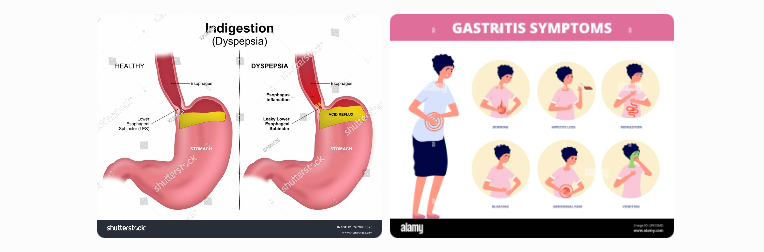
Dyspepsia (commonly known as indigestion) is a common digestive problem that causes discomfort or pain in the upper abdomen. It is not a disease but a group of symptoms that occur after eating. Many people experience it occasionally, but when it becomes frequent or chronic, it needs attention. In homeopathy, remedies are selected based on the exact type of discomfort, triggers, and the person’s overall constitution. Homeopathy aims to improve digestion, reduce acidity, and relieve bloating gently. It works well as supportive care along with dietary changes.

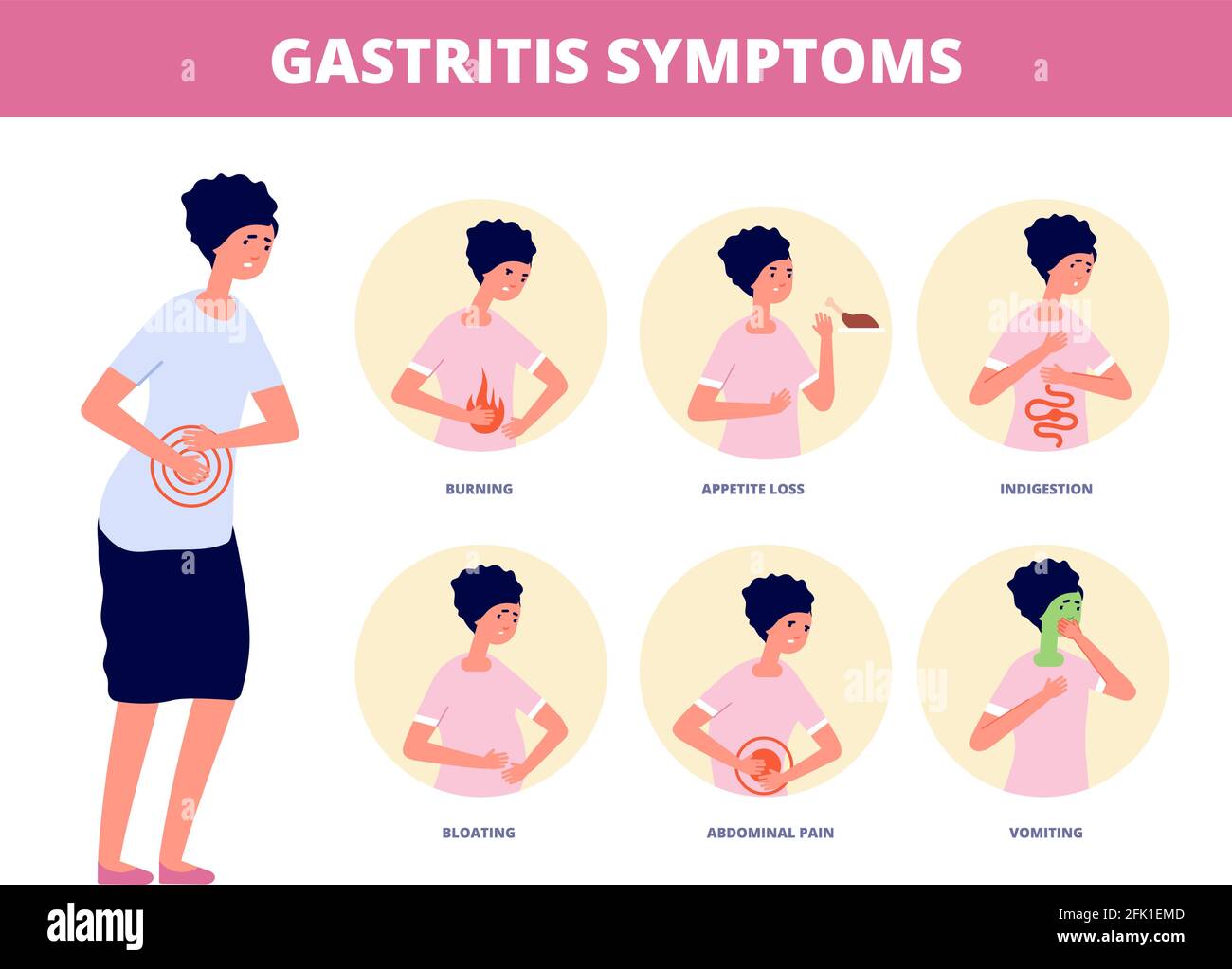
(Images above show the difference between normal stomach function and dyspepsia, including acid reflux, inflammation, bloating, and common symptoms like burning and abdominal pain.)
Causes
Common causes of dyspepsia include:
- Overeating or eating too quickly
- Spicy, fatty, or heavy foods
- Excessive tea, coffee, alcohol, or smoking
- Stress and anxiety
- Gastroesophageal reflux (GERD) or gastritis
- Side effects of certain medicines (painkillers, antibiotics)
- Helicobacter pylori infection in some cases
Symptoms
Typical symptoms of dyspepsia are:
- Feeling of fullness or bloating soon after eating
- Burning sensation or pain in the upper stomach (heartburn)
- Nausea or sour belching
- Excessive gas or flatulence
- Loss of appetite
- Sour or bitter taste in the mouth
- Discomfort that worsens after meals or when lying down
Homeopathy Medicines with Key Symptoms and Doses
Homeopathic remedies work best when matched to the individual symptom picture. The following are commonly used for dyspepsia. Remedy selection must be done by a qualified homeopath after detailed case-taking. These are general guidelines only. Stop when clear improvement begins.
Nux Vomica Best for dyspepsia from overeating, spicy food, alcohol, or stress. There is frequent sour belching, nausea, and a feeling of fullness. The person is irritable and chilly. Typical use: 30C, 3-5 pellets 1-2 times daily.
Pulsatilla Nigricans Useful when symptoms come after eating rich or fatty foods. There is bloating, nausea, and changeable symptoms. The person feels better in open air and craves sympathy. Typical use: 30C, 3-5 pellets 1-2 times daily.
Carbo Vegetabilis Indicated for heavy bloating, excessive gas, and belching that gives temporary relief. The person feels cold, weak, and wants fanning. Typical use: 30C, 3-5 pellets 1-2 times daily.
Lycopodium Clavatum For bloating and fullness even after eating a small amount. Symptoms are worse in the late afternoon or evening. Craving for sweets is common. Typical use: 30C or 200C, 3-5 pellets 1-2 times daily.
Arsenicum Album For burning pain in the stomach with great anxiety and restlessness. The person wants small sips of warm water and feels chilly. Typical use: 30C, 3-5 pellets 1-2 times daily.
China Officinalis Helpful for bloating, flatulence, and weakness after loss of fluids or heavy meals. The abdomen feels tight and sensitive to touch. Typical use: 30C, 3-5 pellets 1-2 times daily.
Robinia Indicated for intense acidity with sour vomiting and burning pain that wakes the person at night. Typical use: 30C, 3-5 pellets 1-2 times daily.
Natrum Phosphoricum Useful for sour eructations, heartburn, and creamy yellow coating on the tongue. Good for acidity from fatty foods. Typical use: 6X or 30C, 3-5 pellets 1-2 times daily.
Sulphur For chronic dyspepsia with burning, hungry feeling at 11 a.m., and intolerance to heat. Often used as an intercurrent remedy. Typical use: 30C or 200C, sparingly (once weekly under guidance).
Kali Carbonicum For bloating with cutting pain and weakness. Symptoms are worse between 2–4 a.m. and the person feels cold. Typical use: 30C, 3-5 pellets 1-2 times daily.
Important guidance: Simple lifestyle changes help a lot — eat small frequent meals, avoid spicy/fatty foods, do not lie down immediately after eating, reduce stress, and quit smoking/alcohol. If dyspepsia is frequent, severe, or accompanied by weight loss, vomiting blood, or black stools, consult a doctor immediately to rule out ulcers or other serious conditions. Homeopathy works best when the remedy matches your individual symptoms. This information is for educational purposes only and not a substitute for professional medical or homeopathic advice. Consult a qualified doctor for persistent symptoms and a registered homeopath for personalized treatment.