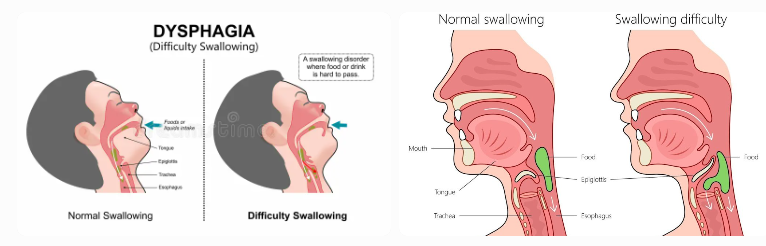
Dysphagia is the medical term for difficulty swallowing. It can make eating, drinking, or even swallowing saliva feel uncomfortable or impossible. Dysphagia may affect the mouth, throat (oropharyngeal dysphagia), or the esophagus (esophageal dysphagia). It is not a disease itself but a symptom of an underlying problem. In homeopathy, remedies are selected based on the exact sensation of difficulty, nature of pain, type of food that causes trouble, and the person’s overall constitution. Homeopathy offers supportive care to ease symptoms and improve swallowing comfort, but it is not a substitute for medical diagnosis and treatment.
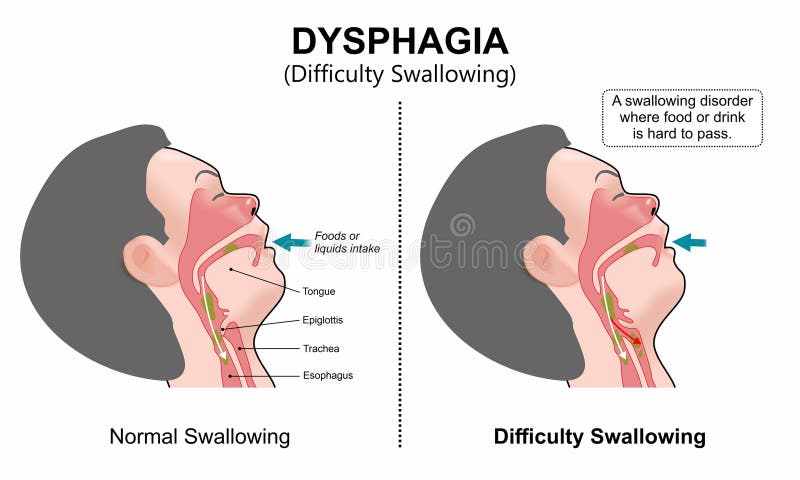

(Images above clearly show the difference between normal swallowing and dysphagia, where food or liquid has difficulty passing through the throat or esophagus.)
Causes
Common causes of dysphagia include:
- Gastroesophageal reflux disease (GERD) or esophagitis
- Stricture or narrowing of the esophagus
- Achalasia (failure of the lower esophageal sphincter to relax)
- Neurological problems (stroke, Parkinson’s disease, multiple sclerosis)
- Muscle weakness or paralysis in the throat
- Tumors, infections, or inflammation
- Side effects of certain medicines or radiation therapy
Symptoms
Typical symptoms include:
- Sensation of food or liquid getting stuck in the throat or chest
- Pain or discomfort while swallowing (odynophagia)
- Coughing or choking while eating or drinking
- Regurgitation of food or sour liquid
- Unexplained weight loss or repeated chest infections
- Feeling of a lump in the throat (globus sensation)
- Difficulty swallowing solids, liquids, or both
Homeopathy Medicines with Key Symptoms and Doses
Homeopathic remedies are chosen according to the individual symptom picture. The following are commonly considered for dysphagia. Remedy selection, potency, and repetition must be determined only by a qualified homeopath after detailed case-taking and in coordination with a gastroenterologist or ENT specialist. These are general guidelines only.
Baryta Carbonica Indicated for difficulty swallowing with a sensation of a lump or plug in the throat. Especially useful in elderly or those with enlarged tonsils and slow mental response. Typical use: 30C, 3-5 pellets 1-2 times daily.
Lachesis Mutus For dysphagia with a feeling that something is stuck in the throat, worse on the left side. Cannot tolerate anything tight around the neck; symptoms worse after sleep. Typical use: 30C, 3-5 pellets 1-2 times daily.
Belladonna Useful in acute dysphagia with red, inflamed throat, burning pain, and difficulty swallowing liquids more than solids. Throat feels constricted. Typical use: 30C, 3-5 pellets 1-2 times daily (short term).
Hyoscyamus Niger Indicated when there is difficulty swallowing with spasms or choking sensation. The person may have nervous twitching or muttering. Typical use: 30C, 3-5 pellets 1-2 times daily.
Ignatia Amara For dysphagia linked to emotional stress or grief, with a lump-in-throat sensation (globus hystericus) that improves while eating. Typical use: 30C, 3-5 pellets 1-2 times daily.
Nux Vomica Helpful when dysphagia comes with spasmodic pain and a sensation of constriction after overeating or stress. Patient is irritable and chilly. Typical use: 30C, 3-5 pellets 1-2 times daily.
Arsenicum Album For burning pain while swallowing with great anxiety and restlessness. The person feels chilly and wants small sips of warm water. Typical use: 30C, 3-5 pellets 1-2 times daily.
Causticum Indicated for paralysis-like weakness of swallowing muscles, especially after stroke or in elderly. Hoarseness and rawness in throat. Typical use: 30C, 3-5 pellets 1-2 times daily.
Phosphorus Useful when there is difficulty swallowing with easy choking on liquids. The person craves cold drinks but may vomit them when they become warm. Typical use: 30C, 3-5 pellets 1-2 times daily (use cautiously).
Mercurius Solubilis For dysphagia with excessive salivation, swollen glands, and offensive breath. Pain is worse at night. Typical use: 30C, 3-5 pellets 1-2 times daily (short term).
Important guidance: Dysphagia can be a sign of serious conditions such as esophageal cancer, stricture, or neurological disorders. Immediate medical evaluation (endoscopy, barium swallow, etc.) is essential. Do not ignore persistent difficulty swallowing. Homeopathy may provide supportive relief for discomfort and spasm but must be used only under professional guidance alongside conventional care. Lifestyle tips include eating slowly, taking small bites, sitting upright while eating, and avoiding very hot or cold foods. This information is for educational purposes only and not a substitute for professional medical or homeopathic advice. Consult a qualified doctor (gastroenterologist or ENT specialist) for proper diagnosis and treatment, and a registered homeopath for individualized remedy selection. Early intervention improves outcomes significantly.