Dementia is a general term for a group of symptoms that affect memory, thinking, reasoning, and daily functioning. It is not a single disease but a syndrome usually caused by progressive damage to brain cells. The most common type is Alzheimer’s disease, but others include vascular dementia, Lewy body dementia, and frontotemporal dementia. It mostly affects older people and worsens over time. In homeopathy, remedies are chosen based on the individual’s unique mental, emotional, and physical symptoms to provide supportive care for memory, confusion, behavior changes, and overall vitality. Homeopathy is complementary only and does not replace conventional medical management, medications, or therapies.


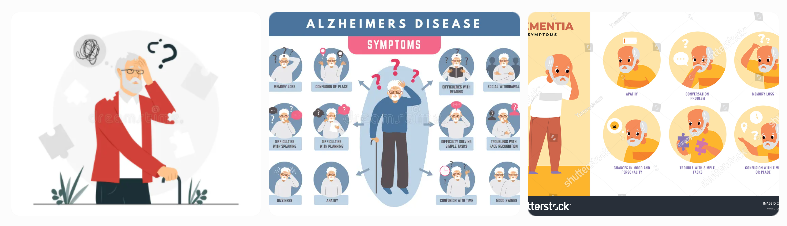
(Images above illustrate common experiences of dementia, including memory loss, confusion, difficulty with daily tasks, and emotional changes in elderly individuals.)
Causes
Dementia is mainly caused by:
- Progressive degeneration of brain cells (as in Alzheimer’s disease)
- Reduced blood flow to the brain (vascular dementia due to strokes or small vessel disease)
- Abnormal protein deposits in the brain (Lewy bodies or frontotemporal changes)
- Risk factors include advanced age, family history, head injury, high blood pressure, diabetes, smoking, and lack of mental or physical activity
Symptoms
Common symptoms that develop gradually include:
- Memory loss, especially forgetting recent events or conversations
- Difficulty finding words or following conversations
- Confusion about time, place, or people
- Trouble with planning, solving problems, or doing familiar tasks
- Changes in mood, personality, or behavior (irritability, withdrawal, or agitation)
- Poor judgment and disorientation
- In later stages: difficulty walking, swallowing, or recognizing family members
Homeopathy Medicines with Key Symptoms and Doses
Homeopathic remedies for dementia are highly individualized based on the person’s mental state, behavior, and associated complaints. The following are among the commonly considered remedies. Remedy selection, potency, and repetition must be determined only by a qualified and experienced homeopath after thorough case-taking, preferably in coordination with a neurologist or geriatric specialist. These are general guidelines only.
Baryta Carbonica Indicated for elderly people with marked memory loss, childish behavior, confusion, and difficulty understanding or communicating. The person may feel shy, timid, or mentally slow. Typical use: 30C or 200C, 3-5 pellets once or twice weekly (sparingly).
Anacardium Orientale Useful when there is memory loss with a sensation of a plug in the brain or feeling of two wills. The person may be irritable, abusive, or have sudden loss of memory for recent events. Typical use: 30C, 3-5 pellets 1-2 times daily.
Hyoscyamus Niger For restless, agitated dementia with muttering, jealousy, suspicion, or inappropriate behavior (undressing, exposing oneself). The person may pick at bedclothes or talk nonsense. Typical use: 30C, 3-5 pellets 1-2 times daily (short term under guidance).
Alumina Indicated for confusion, slowness of thinking, and difficulty finding the right word. The person may feel hurried yet unable to complete tasks and has dryness of mucous membranes. Typical use: 30C, 3-5 pellets 1-2 times daily.
Lycopodium Clavatum For lack of self-confidence, anticipatory anxiety, and memory weakness, especially for names or recent events. Digestive complaints and craving for sweets may be present. Typical use: 30C or 200C, 3-5 pellets 1-2 times daily.
Calcarea Carbonica Suited to anxious, fearful individuals with forgetfulness and mental fatigue. They may feel overwhelmed by simple tasks and have a tendency to catch colds easily. Typical use: 30C or 200C, 3-5 pellets once or twice weekly.
Phosphoric Acid For mental and physical exhaustion with indifference and memory loss after grief or prolonged illness. The person answers slowly and feels apathetic. Typical use: 30C, 3-5 pellets 1-2 times daily.
Nux Moschata Helpful in cases with drowsiness, confusion, and a dreamy state. The person may have changeable mood and feel as if in a trance. Typical use: 30C, 3-5 pellets 1-2 times daily.
Opium For stupor-like state with slow responses, confusion, and retained stool or urine. Useful in advanced cases with heavy sleep and snoring. Typical use: 30C, 3-5 pellets sparingly (under guidance).
Sulphur Often used as an intercurrent remedy when there is burning sensation, restlessness, and uncleanliness in behavior. The person may feel warm and have many ideas but poor execution. Typical use: 30C or 200C, sparingly (once weekly under guidance).
Important guidance: Dementia requires a multidisciplinary approach — regular medical evaluation, brain-friendly lifestyle (healthy diet, physical activity, mental stimulation, social engagement), and safety measures at home. Homeopathy may help improve quality of life, reduce agitation, and support cognitive function in some cases but cannot reverse the underlying brain changes. This information is for educational purposes only and not a substitute for professional medical or homeopathic advice. Consult a qualified neurologist or geriatrician for diagnosis and management, and a registered homeopath experienced in neurological conditions for individualized remedy selection. Early support and compassionate care greatly help both the person and their family.