Chronic Joint Pain refers to persistent or recurrent pain, stiffness, and inflammation affecting one or more joints that lasts for more than three months. It is most commonly seen in conditions like osteoarthritis (degenerative) or rheumatoid arthritis (inflammatory/autoimmune), but can also arise from other causes. In homeopathy, treatment is strictly individualized based on the exact character of the pain (aching, shooting, burning), location, aggravating/relieving factors (weather, motion, time of day), and the person’s overall physical and mental constitution. Homeopathy aims to reduce pain and inflammation, improve joint mobility, and address the underlying susceptibility rather than just suppressing symptoms. It works well as a complementary approach alongside physiotherapy, diet, and lifestyle changes. Chronic joint pain requires medical evaluation (blood tests, X-ray, or rheumatologist consultation) to identify the exact cause and rule out serious conditions.
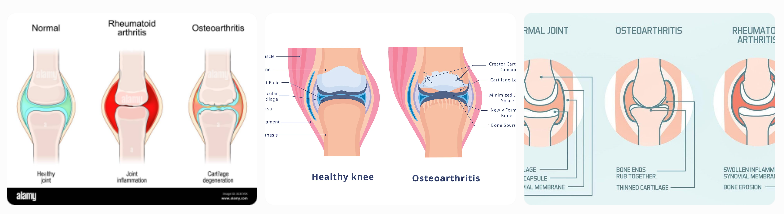
(Images above show clear comparison of a normal healthy joint versus joints affected by rheumatoid arthritis (inflammation and swelling) and osteoarthritis (cartilage loss, bone spurs, and degeneration).)
Causes
Common causes of chronic joint pain include:
- Osteoarthritis (wear and tear of cartilage due to aging, overuse, or obesity)
- Rheumatoid arthritis or other autoimmune conditions where the immune system attacks the joints
- Previous injuries, repetitive strain, or gout
- Inflammatory conditions like ankylosing spondylitis or psoriatic arthritis
- Lifestyle factors such as sedentary habits, poor posture, or nutritional deficiencies
- Metabolic issues like diabetes or thyroid disorders
Symptoms
Symptoms vary depending on the underlying condition but typically include:
- Persistent aching, throbbing, or sharp pain in the joints (knees, hips, hands, shoulders, etc.)
- Morning stiffness lasting more than 30 minutes (more common in inflammatory types)
- Swelling, warmth, or redness around the affected joints
- Reduced range of motion, cracking sounds (crepitus), or deformity in advanced cases
- Pain worsened by weather changes (cold/damp), overexertion, or rest; better or worse with motion
- Fatigue, muscle weakness, or general tiredness
Homeopathy Medicines with Key Symptoms and Doses
Homeopathic remedies work best when matched closely to the individual symptom picture. The following are commonly considered for chronic joint pain based on traditional materia medica. Remedy selection, potency, and frequency must be determined by a qualified homeopath after detailed case evaluation. These are general guidelines only. Stop when clear improvement begins and reassess. Self-medication is not advised.
Rhus Toxicodendron Indicated for joint pain with marked stiffness and restlessness. Pain is worse on first movement or after rest (especially morning), better from continued motion and warmth. Often aggravated by cold damp weather or overexertion. Typical use: 30C, 3-5 pellets 2-3 times daily during painful phases.
Bryonia Alba Suited when joint pain is worse from the slightest motion and better from absolute rest or pressure. Pain is sharp or stitching; joints are hot, swollen, and very tender. Patient is irritable and thirsty for large quantities of water. Typical use: 30C, 3-5 pellets 1-2 times daily when motion severely aggravates.
Arnica Montana Useful for chronic joint pain from old injuries or strain with a bruised, sore feeling. Joints feel tender as if beaten; pain worse from touch or movement. Typical use: 30C, 3-5 pellets 1-2 times daily for traumatic-type pain.
Calcarea Carbonica Indicated in fair, flabby individuals with aching joint pain and swelling, especially knees. Pain worse from cold and damp; patient feels chilly yet sweats on head at night; useful for constitutional weakness. Typical use: 30C or 200C, sparingly (once daily or weekly under guidance).
Ledum Palustre Helpful for joint pain that starts in the lower limbs and moves upward. Joints feel cold to touch yet pain is relieved by cold applications; useful in gouty or rheumatoid tendencies with swelling. Typical use: 30C, 3-5 pellets 1-2 times daily.
Kali Carbonicum For stitching or sharp joint pains with great weakness, especially in the back and knees. Pain worse at 2-4 a.m., from cold, or while lying on the painful side; patient feels chilly and exhausted. Typical use: 30C, 3-5 pellets 1-2 times daily.
Ruta Graveolens Indicated for joint pain involving tendons and ligaments from overuse or strain. Bruised, aching pain with stiffness; worse from cold and damp; useful when Rhus Tox is not sufficient. Typical use: 30C, 3-5 pellets 2-3 times daily.
Actaea Racemosa (Cimicifuga) For joint pain with stiffness and muscle soreness, often associated with hormonal changes or neuralgic pains. Pain worse from cold and better from warmth and open air. Typical use: 30C, 3-5 pellets 1-2 times daily.
Sulphur Useful in chronic cases with burning sensations in joints, itching, or when well-selected remedies do not hold. Pain worse from heat or standing; patient is warm-blooded with unhealthy skin tendency. Often used as an intercurrent remedy. Typical use: 30C or 200C, sparingly (single dose or once weekly under guidance).
Causticum Indicated for joint pain with stiffness, contractures, or paralytic weakness, especially in progressive cases. Pain worse from cold dry weather and better from warmth and damp weather. Typical use: 30C, 3-5 pellets 1-2 times daily.
Important guidance: Chronic joint pain can stem from serious conditions like rheumatoid arthritis, so consult a rheumatologist or orthopedic doctor for proper diagnosis and monitoring (blood tests for RA factor, uric acid, etc.). Homeopathy can help relieve pain and stiffness but works best with supportive care: gentle exercises, weight management, warm compresses, anti-inflammatory diet (reduce sugar and processed foods), and physiotherapy. Avoid self-medication, especially if there is severe swelling, deformity, or fever. This information is for educational purposes only and not a substitute for professional medical or homeopathic advice. Always consult a qualified doctor and registered homeopath for accurate diagnosis and personalized treatment.