Chronic Eye Infection refers to persistent or recurrent inflammation and infection of the eye structures, commonly involving the conjunctiva (chronic conjunctivitis), eyelids (chronic blepharitis), or cornea (chronic keratitis). It can last for weeks, months, or recur frequently, often leading to discomfort and potential complications like corneal scarring or vision changes if not managed properly. In homeopathy, treatment is highly individualized, focusing on the specific nature of discharge, pain, modalities (what improves or worsens symptoms), and the person's overall constitution rather than the infection alone. Homeopathy aims to reduce inflammation, promote healing, and address the tendency for recurrence. It is best used as a complementary approach. Chronic eye infections require prompt evaluation by an ophthalmologist to rule out serious causes, prevent spread, and assess for underlying conditions.
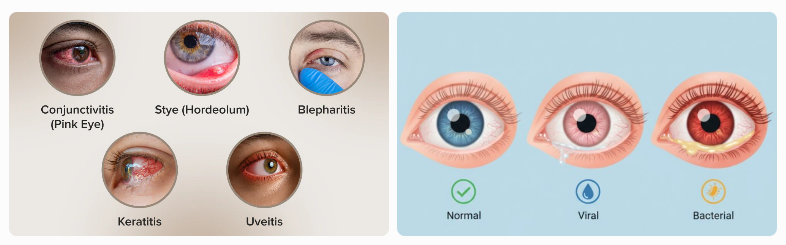
(Images above illustrate various types of eye infections, including conjunctivitis (pink eye), blepharitis, and keratitis, showing redness, swelling, discharge, and comparison with normal eyes.)
Causes
Chronic eye infections often arise due to:
- Repeated bacterial, viral, or allergic triggers that fail to resolve completely
- Poor eyelid hygiene leading to blepharitis (inflammation of eyelid margins)
- Blocked meibomian glands or dry eye syndrome
- Underlying conditions like allergies, autoimmune disorders, diabetes, or weakened immunity
- Prolonged use of contact lenses, eye drops, or exposure to irritants (dust, smoke, pollutants)
- Incomplete treatment of acute infections or resistant organisms
Symptoms
Common symptoms in chronic cases include:
- Persistent redness of the eye or eyelid margins
- Itching, burning, or gritty/foreign body sensation
- Watery or thick discharge (yellow, green, sticky, or crusty, especially in the morning)
- Swelling or crusting of eyelids
- Sensitivity to light (photophobia), blurred vision, or mild pain
- Feeling of dryness or heaviness in the eyes
- Recurrence with triggers like cold, wind, or fatigue
Homeopathy Medicines with Key Symptoms and Doses
Homeopathic remedies work best when matched closely to the individual symptom picture. The following are commonly considered for chronic eye infections based on traditional materia medica. Remedy selection, potency, and frequency must be determined by a qualified homeopath after detailed case evaluation. These are general guidelines only. Stop when clear improvement begins and reassess. Self-medication is not advised, especially with vision changes or severe symptoms.
Euphrasia Officinalis Indicated for chronic conjunctivitis with profuse, acrid, watery discharge that burns and irritates the skin. Eyes feel gritty; constant blinking or wiping; symptoms worse in sunlight or wind, better in open air or from wiping tears. Often called the “eyebright” remedy. Typical use: 30C, 3-5 pellets 2-3 times daily during active symptoms.
Pulsatilla Nigricans Useful for thick, bland, yellowish-green discharge with sticky eyelids in the morning. Eyes itch and burn; symptoms are changeable, better in open air and cool applications, worse in warm rooms. Mild, weepy disposition often present. Typical use: 30C, 3-5 pellets 1-2 times daily.
Graphites Indicated for chronic blepharitis or conjunctivitis with thick, sticky, honey-like discharge and cracked, dry eyelids. Eyelids may stick together; burning and itching; suits persons with dry skin and constipation. Typical use: 30C, 3-5 pellets 1-2 times daily.
Silicea Helpful in stubborn chronic cases with slow healing, recurrent styes, or suppuration. Discharge may be thin and offensive; splinter-like pains; sensitivity to cold drafts; useful when every minor issue affects the eyes. Typical use: 6X or 30C, 3-5 pellets 1-2 times daily (monitor progress carefully).
Mercurius Solubilis Suited for chronic infections with profuse, thin, greenish, or bloody discharge and burning pains. Eyelids swollen and red; worse at night or from temperature changes; excessive salivation or bad breath may accompany. Typical use: 30C, 3-5 pellets 1-2 times daily.
Sulphur For chronic, burning, itchy eyes with redness and tendency to recur. Discharge is acrid; skin around eyes may be unhealthy; worse from heat or bathing; often an intercurrent remedy when other well-chosen remedies fail. Typical use: 30C or 200C, used sparingly (e.g., once weekly under guidance).
Calcarea Carbonica Indicated in fair, flabby individuals with recurrent eye infections, especially with sour-smelling discharge or styes. Eyes feel strained; chilly yet sweaty head at night; useful for constitutional weakness. Typical use: 30C or 200C, sparingly as a deep-acting remedy.
Natrum Muriaticum Helpful for chronic conjunctivitis with watery discharge like raw egg white and dryness of eyes despite tearing. Cracked lips or emotional suppression often associated; symptoms worse in sunlight. Typical use: 30C, 3-5 pellets 1-2 times daily.
Apis Mellifica For marked swelling and stinging, burning pains with rosy-red conjunctiva. Discharge is scanty but eyes feel puffy; better from cold applications, worse from heat. Typical use: 30C, 3-5 pellets 2-3 times daily during swollen phases.
Rhus Toxicodendron Indicated when eyelids are swollen, red, and itchy with restlessness. Discharge is acrid; symptoms better from warmth and continued motion, worse from cold damp weather or at night. Typical use: 30C, 3-5 pellets 1-2 times daily.
Important guidance: Chronic eye infections can signal deeper issues and may require conventional treatment such as antibiotic/steroid eye drops, eyelid hygiene (warm compresses, lid scrubs), or addressing allergies/dry eyes. Homeopathy can provide supportive relief but should not replace professional ophthalmologic care, especially if there is pain, vision loss, light sensitivity, or corneal involvement. Maintain good hygiene: avoid rubbing eyes, use clean towels, remove makeup properly, and limit screen time. This information is for educational purposes only and not a substitute for professional medical or homeopathic advice. Always consult a qualified ophthalmologist and registered homeopath for accurate diagnosis and personalized treatment.