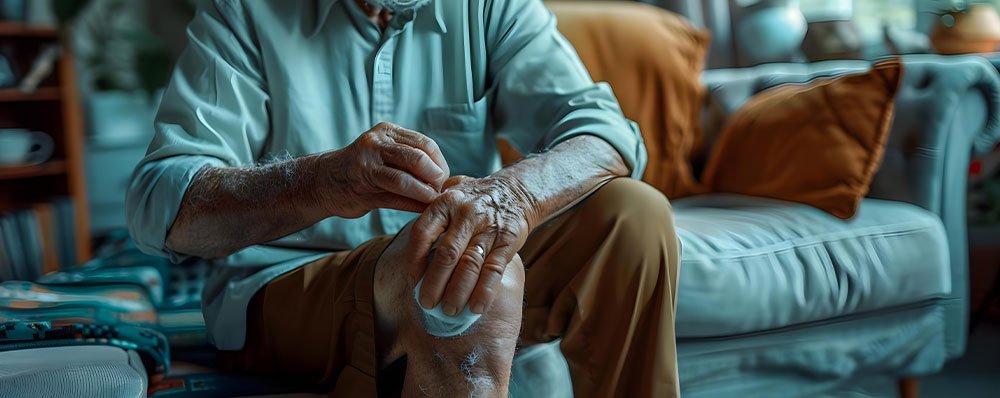
Osteoarthritis (OA), also called degenerative joint disease, is the most common form of arthritis. It occurs when the protective cartilage that cushions the ends of bones in joints gradually breaks down over time, leading to pain, stiffness, swelling, and reduced joint mobility. It most often affects weight-bearing joints (knees, hips, spine) and hands, but can occur in any joint.
It is not an autoimmune or inflammatory disease like rheumatoid arthritis — it is primarily a mechanical “wear-and-tear” condition, although low-grade inflammation plays a role in later stages. Risk factors include age (>50), obesity, previous joint injury, repetitive joint stress, genetics, and joint malalignment.
Important disclaimer Osteoarthritis is a progressive condition. Homeopathy has limited scientific evidence (mostly observational studies, clinical experience, and small trials) for symptom relief in OA. It is complementary — used supportively for pain, stiffness, and quality of life while conventional care is followed (physiotherapy, weight management, exercise, paracetamol, topical NSAIDs, intra-articular injections, or joint replacement in advanced cases). Never rely on homeopathy alone for moderate–severe OA, especially with significant joint deformity, instability, or loss of function. Consult an orthopedist or rheumatologist for accurate diagnosis (X-ray, MRI if needed), grading (Kellgren-Lawrence), and evidence-based management. In Hyderabad, see specialists at Apollo, Yashoda, Care Hospitals, KIMS, or Sunshine Hospitals.
Common Symptoms of Osteoarthritis
- Joint pain — deep, aching, worse with use/activity, better with rest (early); later pain at rest/night
- Morning stiffness or stiffness after inactivity — usually <30 minutes (unlike inflammatory arthritis)
- Crepitus (grating, crunching, or crackling sound/feeling) on movement
- Mild swelling or bony enlargement around joints (Heberden’s/Bouchard’s nodes in hands)
- Reduced range of motion, joint instability (giving way), or deformity (varus/valgus in knees)
- Muscle weakness around affected joint
- Pain worse in cold/damp weather or after overuse
Common Homeopathic Medicines for Osteoarthritis (Supportive / Symptomatic)
Remedies are selected based on pain character, location, modalities (better/worse factors), and constitution.
- Rhus Toxicodendron (Rhus Tox) The single most commonly prescribed remedy for osteoarthritis pain and stiffness. Key indications: Stiffness and pain worst on initial movement or after rest/sleep; better continued gentle motion, warmth, warm applications, walking; pain from overuse, damp/cold weather, or old injury; restlessness; suits most cases of knee, hip, back, or shoulder OA with “rusty gate” stiffness. Typical potency and dose: 30C — 3–5 pellets every 2–4 hours on painful days (acute flare), then 2–3 times daily until relief plateaus (5–14 days). For chronic OA: 200C single dose or once every 1–2 weeks (under guidance).
- Bryonia Alba First-line when pain is markedly aggravated by the slightest motion. Key indications: Sharp, stitching, tearing joint pain; worse any movement, coughing, breathing, turning in bed; better absolute rest, hard pressure, lying on painful side; great thirst for large cold drinks at long intervals; irritability; suits acute flare-ups or large-joint pain (knee, hip) that forces immobility. Typical potency and dose: 30C — 3–5 pellets every 2–4 hours in acute painful phase (usually short-term 2–5 days); taper quickly as pain eases.
- Ruta Graveolens Specific for deep aching in tendons, ligaments, and periosteum. Key indications: Bruised, sore feeling in joints/tendons; pain from overuse, repetitive strain, or after kneeling/squatting; worse cold/damp; better warmth/motion; suits knee/ankle OA, tennis elbow-like pain, or periarticular discomfort. Typical potency and dose: 30C — 3–5 pellets 2–3 times daily for 5–10 days (acute to subacute phase); can repeat as needed.
- Ledum Palustre For cold, puffy joints with pain traveling upward. Key indications: Swollen, cold-to-touch joints; pain starts in feet and ascends; better cold applications/ice; suits gouty or post-traumatic OA with cold sensation despite inflammation. Typical potency and dose: 30C — 3–5 pellets 2–3 times daily during painful/swollen phase (short-term).
- Calcarea Fluorica Supportive for hard, calcified, or fibrotic joint changes. Key indications: Hard nodules, bony overgrowths (Heberden’s/Bouchard’s nodes), stiffness; chronic joint degeneration; suits long-standing OA with crepitus or bony enlargement. Typical potency and dose: 6X or 30C — 3–5 pellets/tablets 2–3 times daily (longer-term supportive use; very safe biochemic).
Other frequently considered remedies (based on specifics):
- Kali Carbonicum — stitching back pain worse 2–4 a.m., chilly
- Aesculus Hippocastanum — low back/sacral pain with stiffness, worse standing/walking
- Causticum — burning pain with stiffness and gradual weakness
- Arnica Montana — after acute strain or trauma
General notes on use:
- Acute painful flare: low potencies (6C–30C), repeated 3–4 times daily for a few days
- Chronic osteoarthritis: higher potencies (200C/1M) given infrequently (weekly to monthly) as constitutional treatment
- Improvement in stiffness, pain intensity, and mobility may be noticed in days (acute) to several weeks/months (chronic)
- Always combine with:
- Physiotherapy (range-of-motion, strengthening, hydrotherapy)
- Weight management (if overweight — even 5–10% loss reduces knee load dramatically)
- Heat or cold packs
- Proper footwear, knee braces if needed
- Low-impact exercise (walking, swimming, cycling)
- Paracetamol/NSAIDs short-term if needed
Re-evaluate with orthopedist or rheumatologist if:
- Pain is severe, rapidly worsening, or night pain dominates
- Joint swelling/redness/heat/fever present
- Significant loss of function or deformity
- No improvement after 4–6 weeks of conservative care
Professional homeopathic guidance ensures correct remedy matching. Homeopathy may help reduce pain/stiffness supportively in mild–moderate OA, but the foundation of management remains physiotherapy, weight control, and orthopedic/rheumatology care when needed. Regular follow-up is essential.